Plan Well, Live Well: Resident Panel, Thursday, January 22nd

Curiosity at Every Age: How Older Adults Are Engaging With AI

At Heron’s Key, curiosity is a way of life. Through resident-led interest groups, shared learning experiences, and informal opportunities to help one another, residents regularly explore new ideas, perspectives, and ways of engaging with the world around them. Recently, that curiosity has extended into thoughtful conversations about artificial intelligence (AI), how it shows up in daily life, and how it can support learning, independence, and connection.

Learning Together Through Open, Peer Support

Technology learning at Heron’s Key is often informal and neighbor-to-neighbor. Each Wednesday, residents with questions or challenges related to technology can stop by the lobby for peer support. Some come to troubleshoot an issue, others learn something new, and some simply listen and observe.

This open, welcoming approach helps residents build confidence at their own pace. It reinforces independence and convenience without pressure or expectation that everyone participates and reflects a broader culture of shared learning that extends well beyond any single topic.

Exposure to Big Ideas in the AI Space

Through our Lifelong Learning interest group, residents recently welcomed Muhammad Aurangzeb Ahmad, a Resident Fellow at Harborview Medical Center (UW Medicine) and a faculty member in computer science at the University of Washington Bothell. His work explores how artificial intelligence intersects memory, identity, and human relationships.

Following the loss of his father, Ahmad created an AI simulation he called “Grandpa Bot” so his young children could experience a sense of knowing their grandfather. That personal experience led him to examine how emerging technologies may reshape the ways we remember loved ones, understand personal identity, and relate to one another across generations.

Rather than focusing on technical details, the talk invited reflection on broader questions. How might artificial intelligence change what it means to be human? What does it mean to remember someone? Where do we draw the line between human experience and code? Residents engaged in thoughtful discussion about how technology may influence relationships, legacy, and the stories we carry forward.

A Practical, Resident-Led Look at ChatGPT

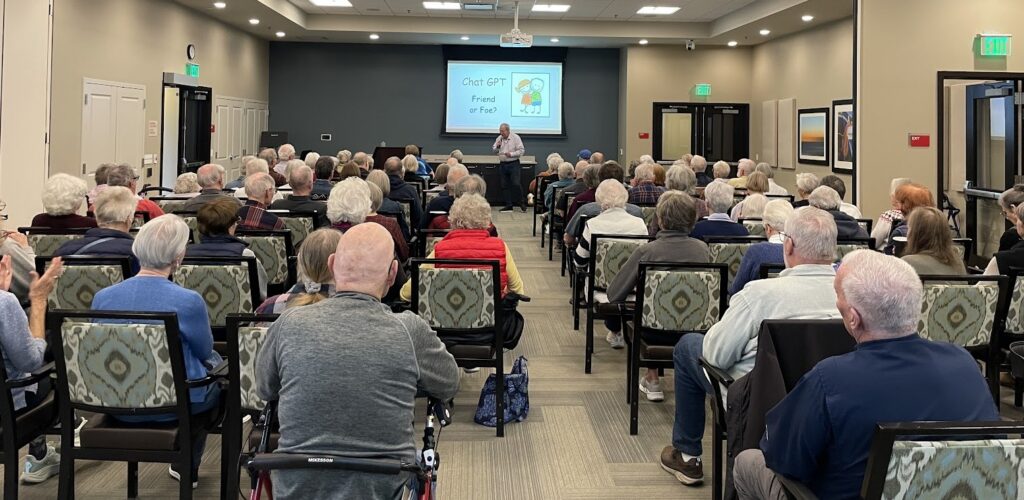
Building on these larger ideas, residents also gathered for a lively, hands-on conversation focused on ChatGPT. Led by a Heron’s Key resident with a background in education, the session was designed to make an often-intimidating topic feel accessible, practical, and even fun.

The discussion combined live demonstrations with real-world examples, including both typed and voice-activated use. To set the context, residents learned that hundreds of millions of people worldwide now use ChatGPT. Locally, engagement was just as strong, with nearly two-thirds of those in the room having already tried ChatGPT or a similar tool.

What stood out most was how residents described using AI not out of novelty, but to support everyday life and continued learning. Examples included finding recipe ideas that fit their kitchen setup, discovering book recommendations, planning trips and reunions, organizing daily priorities, researching family history, drafting speeches for family milestones, and even writing music for choir.

The conversation emphasized how tools like ChatGPT can support independence by helping residents save time, stay organized, and explore new interests. At the same time, residents discussed the importance of using these tools thoughtfully. They emphasized applying critical thinking, avoiding the sharing of personal information, and remembering that AI should never replace professional guidance, especially when it comes to medical advice. These guardrails helped frame AI as a helpful supplement rather than a substitute for human expertise and connection.

Thoughtful Engagement, Not Hype

National research reflects what we see at Heron’s Key. Studies from organizations like AARP show that older adults are increasingly engaging with technology, including AI, while approaching it with discernment. Insights from the AgeTech Collaborative similarly highlight a balance of curiosity and thoughtful concern, particularly around privacy, trust, and appropriate use.

At Heron’s Key, conversations about AI are not about predicting the future or adopting every new tool. They focus on how technology can support everyday life, learning, and independence when approached thoughtfully and together. Residents are asking good questions, sharing knowledge, and deciding for themselves how and when these tools are useful.

The most important takeaway from these conversations is not what AI can do, but how people choose to engage with it. How can technology support curiosity without replacing human connection? How do we use new tools while protecting critical thinking and personal values? What does it mean to learn, remember, and create in a changing world?

These questions are explored through shared learning, open conversation, and a community that values curiosity, independence, and connection at every age.

A New Year. A Thoughtful Plan for Your Future at Heron’s Key

As we look ahead to 2026, a new year offers a natural moment to pause, reflect, and plan with intention. For many, exploring a Life Plan Community is not simply about making a move. It is about choosing a lifestyle that offers confidence, connection, and peace of mind for the years ahead.

At Heron’s Key, thoughtful planning is grounded in transparency, long-term vision, and a commitment to supporting residents at every stage of life.

Looking Ahead with Clarity

As you consider your future, having access to clear information and meaningful guidance can make all the difference. Tools like our Financial Assessment Tool help prospective residents evaluate financial qualifications and explore which apartment floorplans may be the best fit. Our 2026 rates, now published, offer another important resource as you plan ahead.

In 2026, Heron’s Key continues to offer multiple contract options, allowing prospective residents to select the plan that best aligns with their financial goals and lifestyle preferences. Our entrance fee structure remains competitive among Type A Life Plan Communities, while continuing to deliver long-term value through comprehensive services, access to care, and financial predictability.

Monthly service fee adjustments remain thoughtful and consistent, supporting the ongoing strength of the community while maintaining the stability and transparency residents value. This balanced approach ensures Heron’s Key remains a strong nonprofit Life Plan Community today and for generations to come.

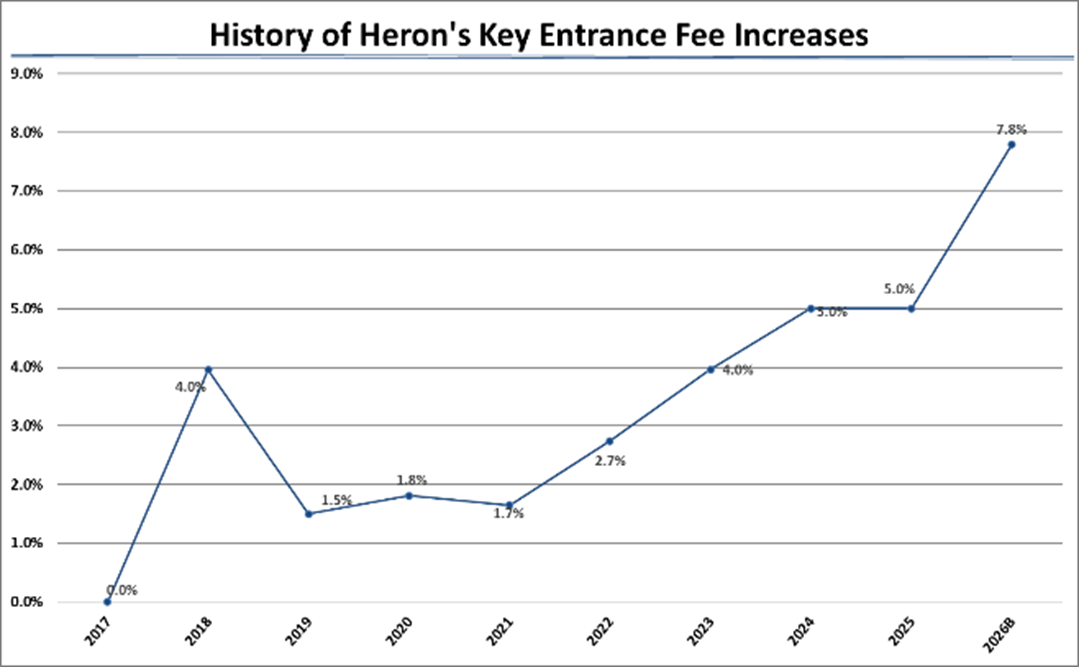
To provide helpful context, the charts below illustrate historical trends in both entrance fees and monthly service fees at Heron’s Key.

History of Heron’s Key Entrance Fee Increases (2017–2026)

Entrance fees at Heron’s Key have increased an average of 3.3% annually since 2017, reflecting measured growth and long-term financial planning during the community’s early years.


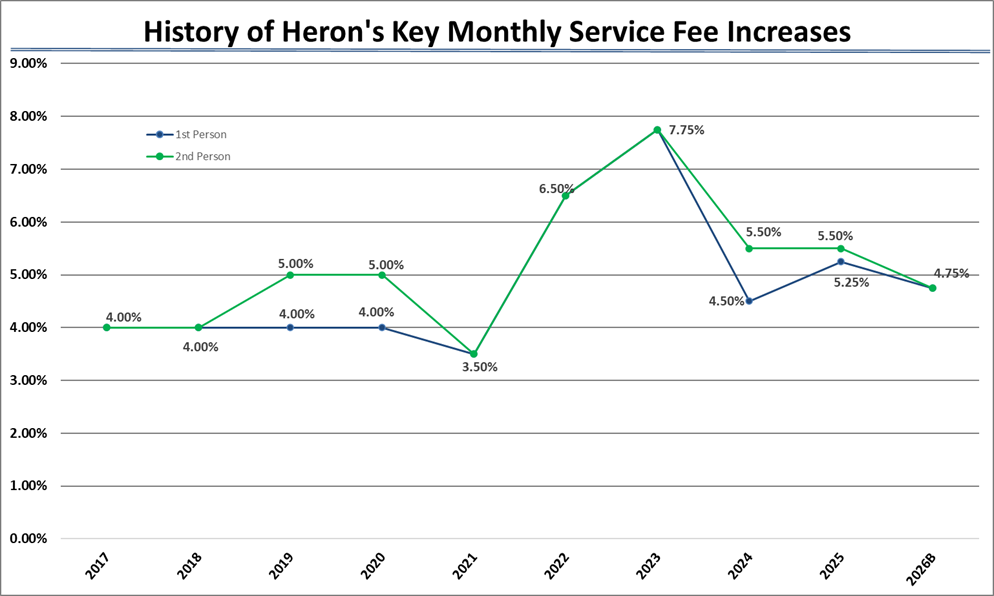
History of Heron’s Key Monthly Service Fee Increases (2017–2026)

Monthly service fees have increased at a steady average since opening, with second-person rates closely aligned to support shared services and community operations.

Understanding the Bigger Picture

One of the defining benefits of a Life Plan Community is pricing transparency and long-term predictability. While annual adjustments may vary based on economic conditions, Heron’s Key takes a thoughtful, forward-looking approach that balances current needs with future sustainability.

As a nonprofit organization, revenue at Heron’s Key is reinvested directly into the community. This supports campus enhancements, resident programs, services, and long-term financial strength, ensuring Heron’s Key remains a vibrant, welcoming place to call home.

Planning Ahead at Heron’s Key

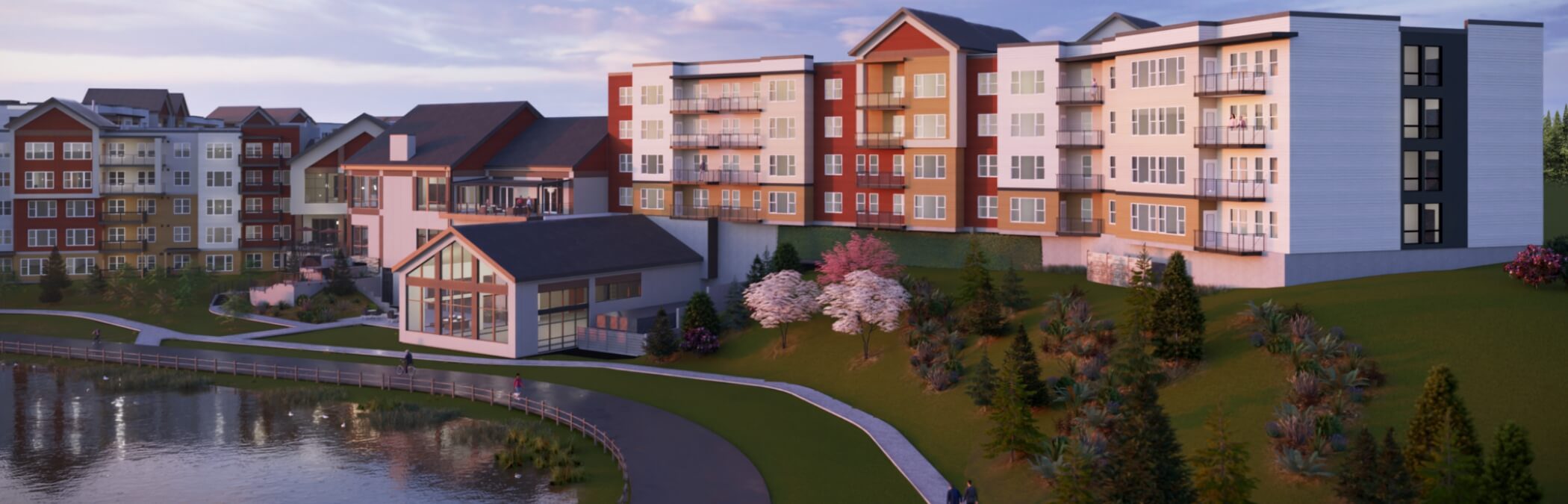
For those considering a move in the future, early planning can offer meaningful advantages. In addition to joining our current waitlist, prospective residents may also choose to join the 10% Depositor List for the Phase II expansion, which is scheduled to break ground in 2026 with doors opening in 2028.

Phase II is currently 76% reserved, reflecting strong interest from individuals and couples who are planning ahead. Joining the depositor list secures your place in the expansion and provides priority consideration for current availability as it arises.

Our team is always happy to share more about our plans for expansion and what’s ahead for the Heron’s Key campus.

Making an Informed Move

Choosing where to spend your future years is a significant decision, and one that benefits from time and thoughtful exploration. Planning ahead allows you to move forward with confidence rather than waiting for a health event or urgent need.

Life Plan Communities are designed to support independent living first, with access to care as needs change. Moving earlier allows residents to fully enjoy the lifestyle, build connections, and take advantage of the full breadth of community life.

Looking Ahead Together

A new year brings new possibilities. Whether you are just beginning your exploration or actively planning your next chapter, we would love to connect. Visit campus, join us for lunch, or attend an upcoming event to experience life at Heron’s Key firsthand.

There is much to discover, and we look forward to sharing what the future holds at Heron’s Key in 2026 and beyond.

Heron’s Key Awards $35,000 in Community Grants to Local Nonprofits

Heron’s Key is proud to announce that, for the first time, our Social Accountability Fund is providing $35,000 in community grants to local nonprofit organizations that share our commitment to service.

These gifts will support groups making a positive difference across Gig Harbor and the surrounding region, especially those focused on older adults, community connection, and volunteer engagement.

“As a nonprofit, it matters to us that we’re not only caring for the people who live and work here, but also helping our wider community,” said Daphne Schneider, Chair of the Social Accountability Committee. “So many people are facing real challenges right now — especially around food security — and we’re proud that Heron’s Key can help.”

How the Social Accountability Grants Work

This new program invites residents and staff members to nominate nonprofit organizations doing meaningful work in our region. The Social Accountability Committee reviews each nomination and evaluates organizations based on their impact, alignment with our mission, and demonstrated need.

Through this process, Heron’s Key ensures that charitable giving reflects our values and supports causes that make a tangible difference in the lives of others.

Our Focus Areas

As part of fulfilling our nonprofit mission, we focus our community outreach efforts in four key areas:

  • Seniors – Programs that serve older adults or invest in the future of aging.
  • Community – Initiatives that make a measurable impact in our region.
  • Volunteerism – Opportunities that engage residents and staff in giving back.
  • Mission – Efforts that further other elements of our organizational purpose.

This Year’s Charitable Recipients

These contributions reflect the values that guide Heron’s Key every day and the collective generosity of our residents, team members, and Board.

We’ll be celebrating these gifts and the impact they’ll have on December 3rd at Heron’s Key.

Green Living at Heron’s Key: Simple Steps to Make a Difference

At Heron’s Key, our commitment to sustainability is deeply rooted in community spirit. Earth Day is more than a date on the calendar—it’s a reminder of the everyday choices we can make to create a healthier planet. Leading the charge here at Heron’s Key is our resident-led Green Interest Group, whose passion and dedication have sparked meaningful change across campus.

A Resident-Led Commitment to Change

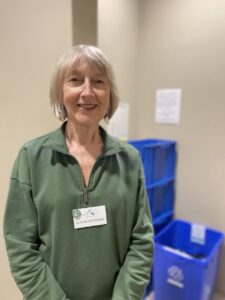
Spearheaded by residents like longtime climate advocate Alison Kettering, the Green Interest Group at Heron’s Key has become an inspirational force in helping shape more conscious habits among our community. Their efforts go beyond education; they partner with our Facilities and Culinary Services teams to discover new strategies to help reduce waste and promote environmental awareness.

Each week, the group shares tips with fellow residents—small, practical steps that add up to a big impact. This grassroots approach has inspired others on campus to rethink their habits and make choices that are better for both people and the planet.

Why It Matters: The Climate Connection

One of the group’s primary focuses is reducing food waste, and for good reason. When food ends up in landfills, it decomposes without oxygen, creating methane, a greenhouse gas that’s more than 25 times more potent than carbon dioxide over a 100-year period. According to the U.S. Environmental Protection Agency, food is the single largest category of material placed in municipal landfills.

By composting organic waste instead, we can significantly cut down on methane emissions and return valuable nutrients to the soil. It’s a win-win for the planet and for future generations. Learn more from the Washington State Department of Ecology about managing organics and composting efforts locally.

Simple Steps to Live a Little Greener at Heron’s Key

Looking for ways to make a difference? Here are a few easy, effective actions inspired by the Green Interest Group at Heron’s Key:

  • Recycle smarter. Learn what can and can’t be recycled locally, and avoid “wish-cycling.”
  • Compost food scraps. Participate in on-campus composting or set up a countertop bin for organic waste. Learn more about Washington’s composting guidance.
  • Cut down on single-use plastics. Use reusable bags, bottles, and containers whenever possible.
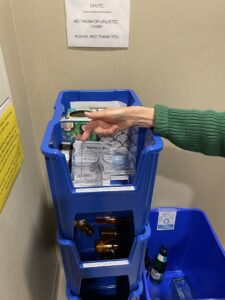
  • Dispose responsibly. Join services like Ridwell to recycle hard-to-dispose-of items like plastic film, batteries, and textiles.
  • Spread the word. Talk to neighbors about easy sustainability swaps and help grow the momentum.

A Growing Movement at Heron’s Key

Thanks to the enthusiasm of the Green Interest Group and residents like Alison, Heron’s Key is seeing real change. There’s a shared sense of ownership, pride, and responsibility when it comes to caring for our environment, and that energy is contagious.

As we celebrate Earth Day at Heron’s Key, we’re reminded that every small action counts. We’re proud of the momentum building within our community and inspired by the commitment of our residents to continue learning, sharing, and taking steps—big and small—toward a more sustainable way of life.