

The ABCs of Senior Living, July 23

7 Keys to Unlocking a Blissful Retirement

For millions of people who are still working, the mere thought of retiring brings a momentary sense of bliss. It conjures up images of sleeping in, doing as one pleases and generally living a life of ease.

This isn’t necessarily an accurate portrayal of retirement life, as many who’ve actually retired can attest. In recent years there’s been a trend of “unretiring”—people going back to work on at least a part-time basis after they’ve retired.

In fact, an analysis by Pew Research Center revealed that workers ages 75 and older are the fastest-growing age group in the workforce. While some are returning to the workplace for financial reasons, others are seeking a sense of purpose, a way to connect socially or relief from boredom.

Advice for Retirement Isn’t a One-Size-Fits-All Toolset

You can find plenty of books filled with retirement advice and countless online articles chock full of suggestions for enjoying retirement. The truth is even the most well-intended recommendations on how to retire may not work out as anticipated because, well, life happens.

When deciding what to do after retirement, you are your own best counsel. You know what brings you the greatest satisfaction and whether you can be content with a mostly open schedule.

These seven retirement tips are meant to be a guide for how to enjoy life after retirement. Why not take a few minutes to see how they could help you experience bliss in retirement?

Key #1: Start Planning Well Before You Retire

This seems like common sense, but you’d be surprised how many people wait until right before they’re ready to retire to start making concrete plans. As alluded to earlier, deciding what to do when you retire begins with self-reflection.

Are you someone who enjoys exploring other cultures? If so, you may want to travel more after you retire. Do you have an inquisitive mind and a thirst for knowledge? Start checking into courses and classes available to older adults, whether online or at a nearby community college. Some colleges and universities offer senior rates on tuition.

If you’re married or in a long-term relationship, start talking with your other half about what you’d both like to do in retirement. This might include a discussion about how much time you want to spend together versus each of you “doing your own thing.”

Key #2: Be as Financially Prepared as Possible

Like planning ahead, this, too, may seem like a no-brainer. We know it’s in our own best interest to start saving for retirement while we’re young, so we have a decent nest egg by the time we’re ready to stop working. Yet, according to an article published by The Motley Fool, 25% of nonretirees have no retirement savings.

Having enough set aside to retire comfortably is a fundamental piece of advice on how to be happy in retirement. A financial adviser can help you define what “comfortably” means to you and develop a strategy for achieving your goal. If you’re already retired, a financial adviser can assist you in making the most of your assets.

Key #3: Take Care of Your Health

It’s easy to take our health for granted until we lose it. Time takes a toll on our bodies, and some of us weren’t dealt the best hand genetically, but we can all make a conscious effort to strive for our best health.

The National Institute on Aging (NIA) is a treasure trove if you’re looking for information on exercise and physical activity for older adults, with specific topics such as exercising for those with chronic health conditions, including arthritis, chronic obstructive pulmonary disease, chronic pain, dementia, diabetes and osteoporosis. If it helps, you can think of it as staying active rather than exercising. Gardening, dancing, going for a walk or a bike ride, even cleaning the house—if it keeps you moving around, it counts.

The NIA offers an abundance of helpful information on healthy eating and nutrition for seniors, too. Getting enough sleep, reducing stress, quitting smoking, limiting alcohol and staying current on health screenings and checkups (including vision, hearing and dental exams) are other ways you can protect your health.

Don’t overlook other facets of your overall health, such as your emotional, social, spiritual and mental health. It’s all connected!

Key #4: Nurture Your Relationships

Speaking of connections, maintaining friendships and ties with family members may be even more important for seniors than for younger adults—even though it can be more challenging. Older adults are at greater risk of becoming isolated, particularly those who live alone. Feelings of loneliness have been linked to dementia, depression, an increased risk for premature death and other health issues.

If your social circle has grown smaller, social media makes it easier than ever to reconnect with friends from the past or to make new ones. You could also take up a new hobby, volunteer, sign up for classes or check out what’s going on at your local community or senior center if you want to meet new people and give yourself more opportunities to build friendships.

Key #5: Expand Your Mind—and Your Horizons

Keeping your brain active is as crucial to your health as is staying physically active. Mental exercise can help keep your brain functioning optimally and potentially stave off cognitive decline and dementia.

Older adults who enjoy learning and trying new experiences have an advantage over those who don’t, but with a modicum of effort even those who’ve become stuck in a mental rut can find something to spark their interest.

If you’re having trouble coming up with ideas, think about what your favorite classes were in school and pick up where you left off. Or, was there an aspect of your career that you would have enjoyed exploring more fully but weren’t able to at the time? If you could have chosen a different path in life, what might it have been?

Study a different culture or period of history that intrigues you. Learn about digital photography or how to speak a new language or play a new instrument. Take ballroom dancing lessons.

Set goals for yourself and share them with a friend who will keep you accountable. Better yet, encourage your friend to set goals too, and you can keep each other accountable.

Key #6: Make a Difference

It’s common for retirees to feel adrift, as if they’ve lost their sense of purpose or part of who they are. In our culture, we tend to identify ourselves and others based on what we do for a living.

When the job or career ends, who are we then? Just a former (fill in the blank)? Of course not. We’re more than what we do to earn income.

A surefire way to become grounded once again is to figure out what you can do to make a difference, whether it’s on a grand scale or for one other living being. There are likely dozens of organizations in your neighborhood that would benefit if you were to volunteer your time, energy and skills, and thousands more globally if you’re willing to travel or can provide assistance remotely.

You could share your knowledge and expertise by becoming a tutor, mentor, docent, coach or consultant. If you have an entrepreneurial spirit, you might even start your own business.

If the world is a better place because you’ve been in it, you can feel good about that—and there’s no reason to stop contributing when you retire.

Key #7: Focus on the Future, Not the Past

A final tip on how to enjoy retirement is to keep looking ahead to what tomorrow offers rather than dwelling on what has been. It’s beneficial to reminisce about happy times and keep those memories alive, of course. The key is to keep from getting so caught up in the past it prevents you from moving forward.

Each of the previous keys can help you embrace the future and all of the possibilities it holds. Here are a few habits and techniques that can encourage a positive outlook:

  • Practice being in the present through meditation and mindfulness, or an activity such as yoga or tai chi
  • Surround yourself with friends and others who have a positive attitude
  • Keep a gratitude journal or set aside a time each day, perhaps while you’re out for a walk, to remind yourself that there is much to be grateful for
  • Try an app like Happify or Headspace

We Specialize in Retirement Bliss

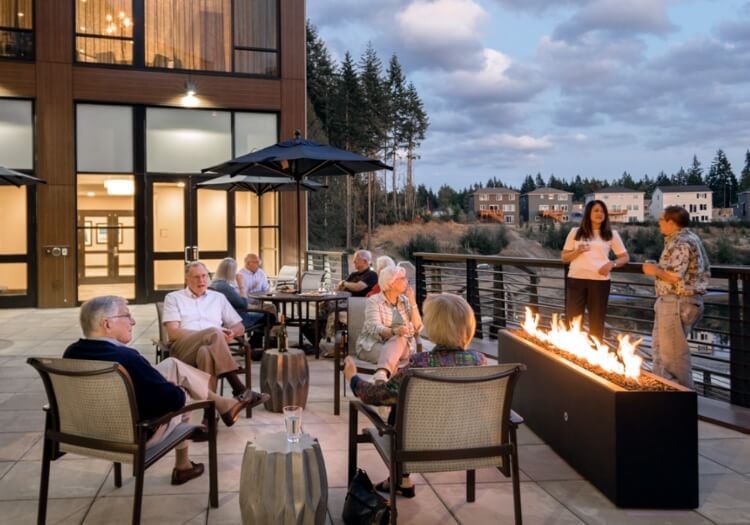
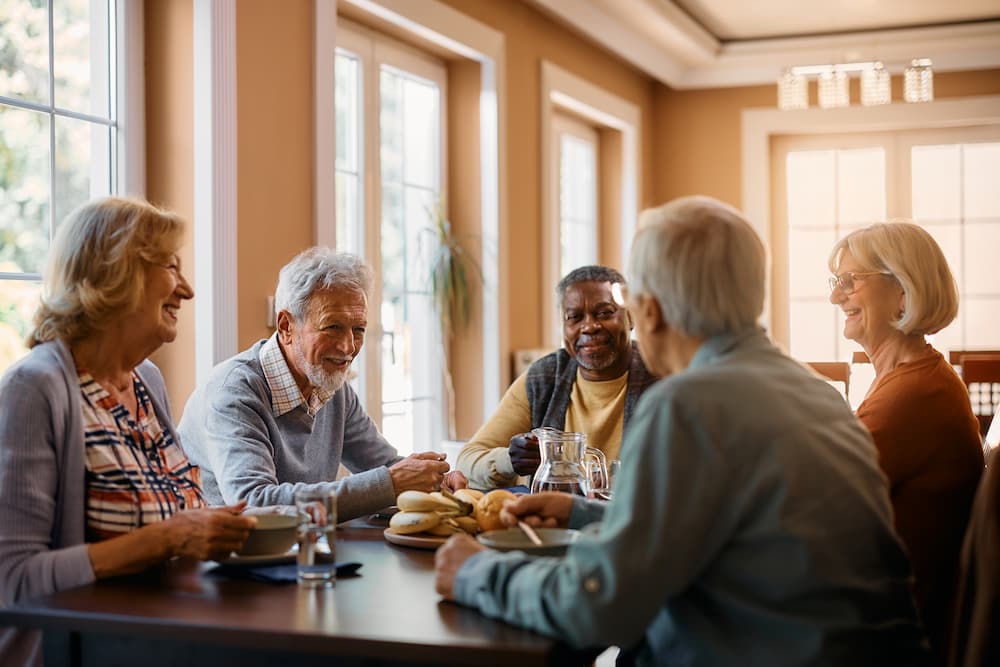
Come spend a little time at Heron’s Key and you’ll soon see how full of life residents are in our community. They’re vibrant, purpose-filled and engaged in what goes on within Heron’s Key, the larger Gig Harbor community and beyond.

This is due, in part, to our focus on the seven aspects of whole-body wellness. It’s also a result of the lifestyle we offer, which includes nutritious dining, an abundance of health and wellness classes, endless opportunities to socialize, educational activities and a beautiful, friendly environment.

We invite you to visit our community so you can see, firsthand, how empowering this lifestyle is. Meet some of the fascinating people who live here and ask them about why they chose Heron’s Key and what it’s like to live here.

Contact us and let’s set up a visit at your convenience.
What Value Is There in Choosing a Life Plan Community?

Discover the Value of a Life Plan Community at Heron’s Key

As you explore senior living options, you’ll encounter many different terms—independent living, assisted living, memory care, skilled nursing, retirement communities, CCRCs, and Life Plan Communities. Understanding the differences is the first step in deciding where you want to live and how you want to plan for your future.

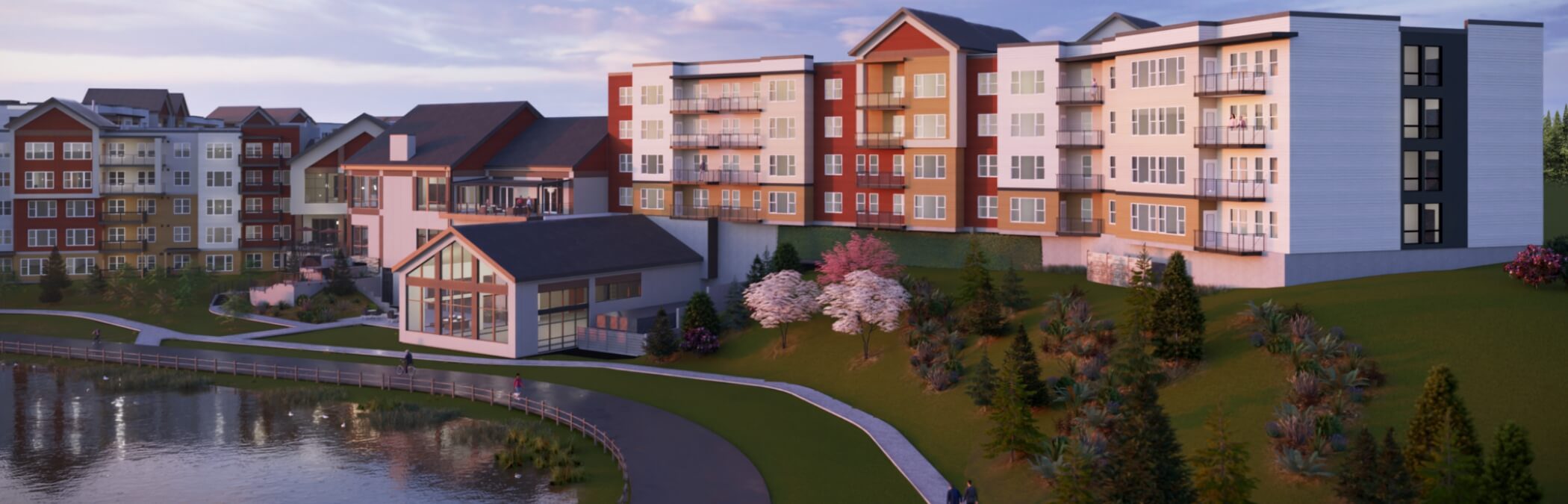
At Heron’s Key in Gig Harbor, WA, we’re proud to be one of only four Type A Life Care Communities in Western Washington, offering not only a vibrant lifestyle but also true peace of mind.


What Is a Life Plan Community?

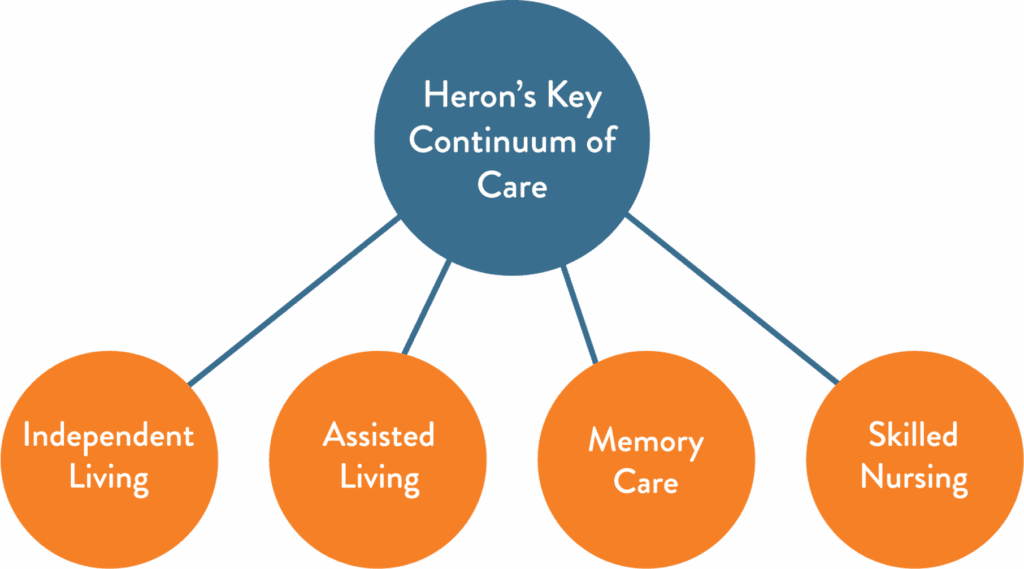
A Life Plan Community—also known as a Continuing Care Retirement Community (CCRC)—provides a full continuum of care on one campus. At Heron’s Key, that means:

  • Independent Living with resort-style amenities and maintenance-free living.

  • Assisted Living for residents who benefit from daily support.

  • Memory Care for those living with Alzheimer’s disease or other forms of dementia.

  • Skilled Nursing and Rehabilitation at Penrose Harbor, located right within our community.

By choosing Heron’s Key, you enjoy the freedom and wellness opportunities of independent living while also having the assurance that, should your health needs change, advanced care is available—without leaving the community you already call home.

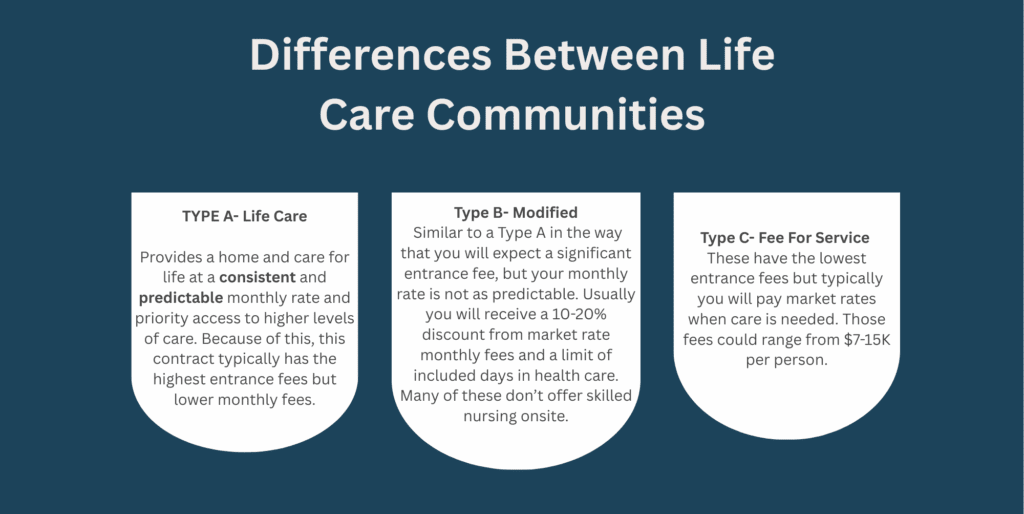
Life Plan Contract Types


Why Choose a Life Plan Community Like Heron’s Key?

Life Plan Communities stand out because they combine lifestyle and long-term security. Benefits include:

  • Peace of Mind for the Future – Priority access to all levels of care without the stress of another move.

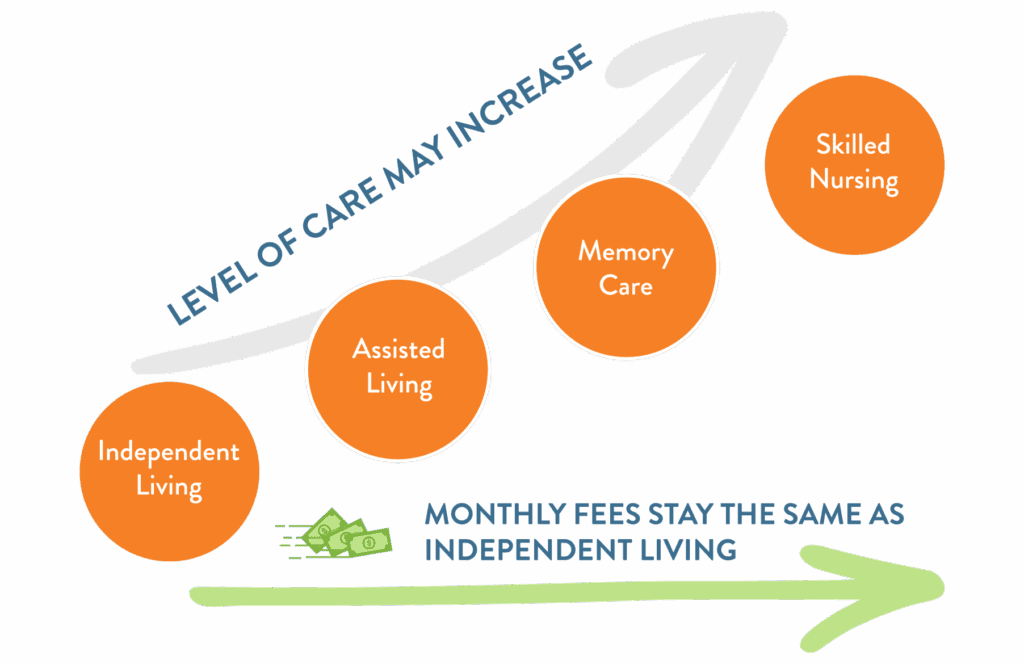
  • Predictable Costs – With our Type A Life Care contract, monthly fees remain stable even if your care needs increase.

  • Engaged Lifestyle – From over 40 resident-led committees to lifelong learning, hiking groups, and social outings, there’s always something to do.

  • Maintenance-Free Living – Say goodbye to home repairs, yardwork, and property taxes.

  • Exceptional Dining – Fresh, locally sourced meals with flexible pay-as-you-go dining options.

  • Welcoming Community – Build new friendships with peers who share your interests and values.

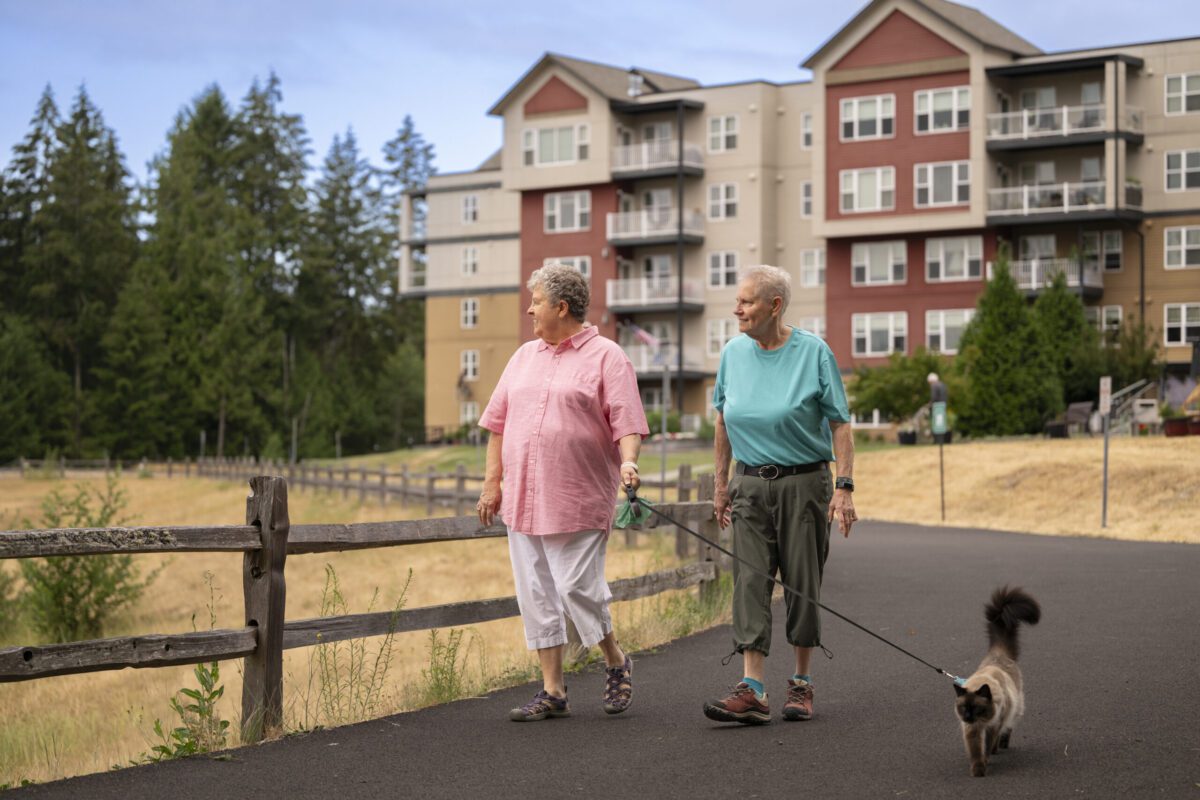
  • Pet-Friendly Campus – Bring your four-legged friends—they’re part of our family too.


The Heron’s Key Advantage

While many senior living communities offer only one type of care, Heron’s Key is different. As a Life Care Community, we provide:

  • Financial Security – Protect yourself from the rising costs of senior care.

  • Long-Term Savings – Lock in today’s rates for future care.

  • Guaranteed Access – Even if your financial resources change, you’ll continue to receive the care you need.

  • Flexibility – Couples can remain in the same community, even if one spouse requires a higher level of care.

This unique combination of lifestyle, security, and savings makes Heron’s Key one of the best retirement living options in the Pacific Northwest.


Plan Your Future With Confidence

Moving to a Life Plan Community like Heron’s Key isn’t just about today—it’s about planning wisely for tomorrow. Many seniors are surprised to find that living here can be more cost-effective than staying in their own homes, once expenses such as property taxes, maintenance, utilities, and insurance are factored in.

By securing your future now, you and your family can relax knowing you’ll always have access to the right care in a trusted environment.


Explore the Value of Heron’s Key

At Heron’s Key, you’re not just choosing a home—you’re choosing peace of mind, financial predictability, and a vibrant lifestyle on the scenic shores of Gig Harbor.

If you live in the area or you’re planning to visit, we’d be happy to show you around and answer your questions. Contact us to set up a time.

Want To Give Your Brain a Boost and Have Some Fun? Check Out These Apps for Seniors

Aging well isn’t just about maintaining your physical health. Keeping your brain active and maintaining social connections are vital to continued good health at any age, including your retirement years.

Engaging in activities that stimulate the mind can help keep your thinking skills in tip-top shape while potentially slowing memory loss and delaying symptoms of dementia, according to WebMD.

With a wealth of brain-training and mental health apps available, it’s easier than ever to squeeze in some mental exercise every day—and have a good time while you’re at it. Some apps have a built-in social component that lets you engage in friendly competition with others who are using the app, making them even more fun.

Visit the Apple App Store or Google Play and you’ll find myriad apps for older adults, from apps for mental health to apps that can help manage medications. Some of the most popular apps are designed specifically to have a positive impact on your brain health.

10 Apps Created to Flex Your Mental Muscles

While not all of these apps are specifically for seniors, all offer various exercises, games and programs to challenge your cognitive skills. Many of them let you track your progress and automatically adjust the level of difficulty as you improve.

They’re listed in alphabetical order. Some are free, while others require a subscription (though most offer a free trial).

  1. BrainHQ. Developed by neuroscientists, BrainHQ offers specialized exercises for memory, attention, brain speed, decision-making and navigation. There’s also a category called people skills.
  2. Brain Wars. The app is described as the world’s first real-time concentration battling app. The goal is to outscore your opponents on brain teasers including quick math, matching, tracing and other challenges.
  3. The company’s brain-training games and personalized programs are developed and tested through scientific research. CogniFit offers a cognitive assessment developed specifically for seniors, as well as a brain stimulation and neurorehabilitation program for adults ages 65 and older, designed for seniors with or without early memory loss or mild cognitive decline.
  4. Dakim BrainFitness Active. Created for adults ages 50 and older, Dakim BrainFitness Active claims it is clinically proven to significantly improve cognitive performance in memory and language abilities. Dakim’s NuroLogic™ technology modifies exercises across six cognitive domains in real time.
  5. The app offers 40+ brain-training games in seven categories, including memory games and concentration and focus games, and lets you see how your performance compares with other users.
  6. Impulse – Brain Training. Ranking at or near the top of Health & Fitness apps in Apple’s App Store, Impulse – Brain Training lets you set goals and receive a personalized brain-training program. The app’s puzzles and games target cognitive skills such as memory, attention, concentration, problem-solving and creativity.
  7. Launched in 2007, Lumosity was one of the earliest brain-training apps and is still one of the best-known. Lumosity determines your baseline and then recommends cognitive games designed to improve your problem-solving skills, memory and attention, the speed at which you process information and your mental flexibility.
  8. The app offers a selection of more than 20 games (with over 720 levels) developed to improve concentration, memory, mental speed, logic reasoning and mindfulness. If you’re feeling competitive, Memorado lets you see how you measure up to others.
  9. To keep you motivated, Peak offers a virtual personal trainer called Coach. Based in neuroscience and cognitive science, Peak’s games are designed to test your focus, memory, problem-solving skills and mental agility with short, intense workouts.
  10. To begin, NeuroNation has you take an assessment and then provides a personalized training plan with more than 30 exercises to improve your memory, attention, processing speed and logical thinking skills. The company collaborates with universities around the world and says its app is being used to help prevent dementia.

Also Worth Mentioning

Although it’s not an app, the Braingle website offers what it describes as the internet’s largest collection of brain teasers, riddles, logic problems and mind puzzles. You can also challenge your mind with trivia quizzes, a variety of brain exercises called “mentalrobics,” and online puzzle games including sudoku, crossword puzzles, chess, checkers and more.

And if you’re interested in a mental health app with activities, exercises and games designed to help you feel more positive, ease anxiety and combat stress, take a look at Happify.

Other Ways to Maintain Your Cognitive Health

The National Institute on Aging notes that learning a new skill like quilting or digital photography may improve memory.

In addition, engaging in activities such as listening to music, dancing, attending a theatrical performance or creative writing “has shown promise for improving quality of life and well-being, from better memory and self-esteem to reduced stress and increased social interaction,” according to the NIA.

Studies have shown that staying active socially, whether by volunteering, participating in group activities or connecting with friends and family, can also support cognitive functioning in later life, the NIA notes.

Intellectual Wellness: One Aspect of Whole-Body Wellness at Heron’s Key

Along with intellectual wellness, our holistic wellness program focuses on six other aspects of whole-body wellness:

  • Emotional
  • Environmental
  • Physical
  • Social
  • Spiritual
  • Vocational

Residents can nurture their intellectual health through lifelong learning activities, including remote and in-person lectures and presentations by guest speakers, as well as by participating in dozens of resident-led interest groups, volunteer activities and an assortment of regularly scheduled games with friends and neighbors.

If you’re ready to satisfy your curiosity with a visit to Heron’s Key, contact us and we’ll gladly set one up for you. While you’re here, you can exercise your imagination by envisioning your future as part of our community!

Featured Image: PeopleImages.com – Yuri A / Shutterstock

Rehab for Seniors: 3 Secrets to Bouncing Back and Achieving Your Best Health

For those experiencing a range of physical, memory or neurological issues as the result of a recent surgery, severe injury or illness such as a stroke, rehabilitation therapy (or bounce back physical therapy, as it’s sometimes called) can help restore their strength and ability to function as they did previously.

Rehab therapy can include any or all of these:

  • Physical therapy, which uses various techniques including exercise, massage, stretching, cold and heat treatments, strength training and physical manipulation to help mobility and strength.
  • Occupational therapy, which helps people regain their ability to do everyday tasks, from bathing and getting dressed to preparing and eating meals. It can also assist in increasing coordination and certain memory functions.
  • Speech therapy to help with communication skills, which can include strengthening the muscles used in speech and working to improve communication-related cognitive functions. It can also be used to resolve problems with swallowing.

In a setting like Penrose Harbor at Heron’s Key that provides comprehensive senior rehabilitation support, a team of skilled therapists and nurses work with the patient’s doctor to develop a therapy plan designed to help the patient reach his or her personal goals.

3 Ways You Can Ensure the Best Bounce Back Therapy Success

#1: Understand your therapy plan.

Knowing how the different components of your treatment plan will affect your recovery can provide the incentive you may need to stick with the plan throughout the rehabilitation process. If you aren’t sure why a certain recommendation was made or you aren’t clear on specific steps of the plan, don’t hesitate to ask questions. Knowledge is empowering!

#2: Set goals you can realistically attain.

Goal setting should be one of the first topics you cover when talking with each of your therapists. Setting specific goals, with time frames for achieving them, can break down the overall recovery process into smaller segments that will seem more attainable. This can help keep you from feeling overwhelmed, frustrated or discouraged. And remember, your goals can be revised along the way.

#3: Be honest with yourself and your therapists.

Adhering to your therapy plan will give you the best chance at achieving your desired outcomes, so if you know up front that there are parts of your plan you won’t do, tell your therapists. Likewise, if you skip the exercises you’re supposed to do outside of your therapy sessions, tell your therapists. If you’re feeling pain, tell your therapists. They may be able to make modifications to address your concerns or challenges you’re having. Think of them as partners you’re collaborating with to restore your best possible quality of life. They, too, want to see you succeed.

Reasons To Consider an ‘Inpatient’ Rehab Center

When you’re discharged from the hospital or surgery center, you may have the option of going somewhere like Penrose Harbor, where you stay for a certain period of time before going home. Receiving rehabilitation therapy in this type of setting has advantages over going home and doing rehab on an outpatient basis.

Here are several examples:

  • You can focus entirely on your recovery, free from the distractions and responsibilities you would have at home, which could speed your recovery process.
  • You don’t have to drive to your therapy sessions or rely on someone else to take you.
  • You have professional caregivers available to assist you around the clock.
  • Your team of therapists can more easily monitor your progress and adjust your treatment plan accordingly. They’re also available to answer questions that may arise.
  • You don’t have to worry about cooking or having food delivered to your home.
  • You’ll have opportunities to get to know others who are there for rehab therapy, and they can provide additional encouragement while you’re recovering.
  • You can be confident your therapy team will know when you’re ready to safely transition from rehab to home.

The Perks of Rehab Therapy at Penrose Harbor

If you go online and look for a rehab facility for elderly adults in Gig Harbor, Penrose Harbor will appear in the search results along with a few others. Here’s what sets Penrose Harbor apart from the rest:

  • Penrose Harbor is the only place in the Gig Harbor area that offers comfortable, all-private suites for short-term rehab.
  • We’ll encourage you to have fun while you’re here. You’ll be able to use the amenities and participate in many of the same activities Heron’s Key residents enjoy every day.
  • The food here is quite good, and you’ll be assured of getting the nutrition you need during your recovery.

Although Heron’s Key residents have priority access to Penrose Harbor’s short-term rehab services, residents of the greater Gig Harbor community and surrounding areas also have access to them, as space permits.

When Life Throws a Curveball …

The experts at Penrose Harbor can help you take on the challenges often associated with rehabilitation therapy. While rehab calls for diligence and concerted effort, our specialized therapists, our dedicated staff and the comfortable, private environment we provide can make your recovery more pleasant.

If you’d like to see Penrose Harbor in person, contact us and we’ll set up a time for you to visit.

America’s Fastest-Growing Sport Scores Points for Active Senior Living

What began as a backyard experiment of sorts nearly 60 years ago has become the fastest-growing sport in the United States three years in a row, starting in 2021 (and is poised to take the honor again in 2024), according to the Sports & Fitness Industry Association (SFIA).

Even if you don’t play or watch sports, there’s a good chance you’ve heard of pickleball. People talk about the game not only because so many are enthused about playing it, but also because of its unusual name. (More on that in a bit.)

In an active senior community like Heron’s Key, we knew we’d find someone among our residents who enjoys playing pickleball. We wanted to find out why the sport has become so popular among older adults. (SFIA notes that the age group with the most pickleball participants is 25- to 34-year-olds, but those age 65+ are tied with 18- to 24-year-olds for the second-highest age group with the most participants.)

We lucked out, because Anne Smith, who has lived at Heron’s Key with her husband, Kerry, for almost three years, happens to be the interim president of the local pickleball club in Gig Harbor.

Anne told us her pickleball club has tripled in size over the last two years, and approximately 75% of the new members are at least 50 years old. About 10 of the roughly 400 members are in their 80s.

Before we get into why pickleball has gained such a following lately, especially among seniors, let’s take a quick look at how it all began.

Beating Boredom on Bainbridge Island

The short version of pickleball’s history is that Joel Pritchard (who served in Washington’s House of Representatives and State Senate, in the U.S. House of Representatives, and as lieutenant governor of Washington for two terms) invented the game with some of his friends and neighbors during the summer of 1965.

Pritchard had been playing golf one day, and when he returned to his cabin on Bainbridge Island (which, by the way, is only about an hour away from Gig Harbor), his children were bored. There was a badminton court on the property but they didn’t have the right equipment, so they improvised using what was on hand—which most likely were paddleball racquets and a Wiffle-type ball.

In the weeks that followed, Pritchard designed different paddles in his woodshop, and he and his friends worked out the rules of the game, with an emphasis on making it accessible to people of all ages (for example, by lowering the net and eliminating any height advantages grown-ups would have over kids).

It was Pritchard’s wife, Joan, who came up with the name. She was familiar with the sport of rowing, where a “pickle boat” is manned by a crew consisting of other boats’ leftover rowers. To her, the name seemed to suit pickleball’s mishmash nature.

Pickles the Dog Came Later

Stories have circulated that the sport was named after the Pritchard family dog, but Pickles the pooch joined the family after the game had been invented.

Pickleball Proves to Be Popular

The game caught on with neighbors and others across Bainbridge Island and then spread to Olympia after Pritchard introduced it to people he knew there. In early 1968, he and several others filed articles of incorporation for Pickle Ball Inc.

The first pickleball tournament was held in Tukwila, Washington, in the mid-1970s, and the first national pickleball organization, the United States Amateur (USA) Pickleball Association, was formed in 1984. By 1990, there were pickleball courts in every state.

According to a recent SFIA report, in 2023 there were 8.9 million people over the age of 6 playing pickleball in the U.S., up from 4.8 million just a year earlier.

The pandemic undoubtedly fueled pickleball’s increase in popularity. At a time when so many restrictions were in place, pickleball offered people of all ages, in communities throughout the world, a chance to be physically and socially active.

What Pickleball Is—and Isn’t

People who aren’t familiar with pickleball might be tempted to think it’s similar to tennis because it’s often played on a tennis court. But as Anne is quick to point out, the two sports are quite different. Both involve hitting a ball over a net using an instrument (a paddle in pickleball and a racquet in tennis), but that’s about all they have in common.

A pickleball court is much smaller—you can fit four pickleball courts on one tennis court—and you can play pickleball nearly anywhere there’s a large enough flat surface, even indoors. Pickleball paddles are roughly twice the size of a paddle used to play table tennis but considerably smaller than a tennis racquet. The ball used in pickleball is slightly larger than a tennis ball but is made of hard plastic, is hollow, and has 26-40 evenly spaced holes in it.

All of this makes pickleball less strenuous than tennis. There’s less running because of the smaller court, and there’s less impact on joints and muscles. But, it’s an active sport that requires reaching and stretching and quick movements. It also requires players to be mentally alert, both to ensure they’re following the rules and to keep score.

Anne notes there’s a saying about pickleball—that it’s easy to learn but hard to master. So why has it become such a craze? Because it’s a great way to be physically active, enjoy some friendly competition and have fun!

A Drop-In Sport With Social Appeal

Unlike most other sports, neighborhood pickleball groups like the one Anne belongs to make it possible for players to show up and participate whenever the courts are open for public play. There’s no need to reserve a court ahead of time or bring a partner.

On public courts, and particularly during busy times, the games are typically played as doubles to allow the maximum number of people to play. After a game is over, two of the four players will leave the court and two more will join the remaining two players for the next game.

Those who leave the court can rotate back in to play again. While they’re waiting, they have the opportunity to talk with other players. This social aspect of the game is part of the reason there’s such a high demand for public pickleball courts in cities and towns across the country.

Pickleball Benefits Both Body and Mind

Pickleball provides a good aerobic workout and keeps the mind active during play as well. For some people, this combination, along with the social factor, makes the sport far more inviting than, say, walking on a treadmill or working out in the gym.

Being so engaged during the game makes the time pass more quickly than with many other types of exercise. And, the breaks between games give players a chance to catch their breath while getting to know one another.

As you can probably surmise, pickleball offers many health benefits. It can:

  • Lower the risk of heart disease. SilverSneakers® cites a study published in the International Journal of Research in Exercise Physiology that found playing pickleball for an hour three days a week for six weeks improved blood pressure, cholesterol and cardiorespiratory fitness among middle-aged and older adults.
  • Improve mood, reduce the risk of depression and help prevent loneliness. Exercise releases endorphins, also known as “feel good” hormones, and can be very effective in warding off depression. So can social connections—and pickleball offers both!
  • Help older adults maintain their independence. It’s no secret that a sedentary lifestyle can result in numerous health challenges, whereas active adult living can help seniors maintain (and in some cases even improve) their balance, strength, reflexes, flexibility, agility and range of motion. Plus, a sport like pickleball requires intense focus, the ability to strategize and hand-eye coordination, which may help protect against cognitive decline.

As with any new physical activity, it’s a good ideal to check with your doctor before you begin.

Caution: Pickleball Can Be Addictive

Anne says she started playing pickleball 12 years ago, when she was in her 60s. She played tennis when she was younger but issues with her back caused her to give up the game.

She heard about pickleball from a friend and decided to drop in at the public court to check it out. She said the group was gracious and let her play in. (Pickleball players are known for being friendly and welcoming new people.)

These days, Anne plays pickleball at least two or three times a week, weather permitting, and she plans to keep playing as long as she’s physically able to. Though she acknowledges her days of playing in pickleball tournaments are over, she’s “happy just to get out and have some happy social play.”

Pickleball has become a big business in the last several years, Anne notes, with travel planners offering pickleball vacations here in the U.S. and in places like Costa Rica. Even many cruise ships feature pickleball courts.

Looking for an Active Senior Living Residence?

Anne is a role model when it comes to active living for seniors. She and Kerry are both involved in a variety of activities within Heron’s Key and the larger Gig Harbor community, not just as participants but also as leaders.

If you’re ready to embrace an active lifestyle like theirs, we invite you to set up a time to visit our community. Contact us and we’ll get the ball rolling!

Featured Image: jo Crebbin / Shutterstock

5 Reasons Gig Harbor Is Among the Best Places to Retire on the West Coast

For those contemplating the best places to retire, Washington may be an intriguing alternative to the Sun Belt states. With easy access to the ocean, forests and mountains, along with a varied climate throughout the state, Washington offers older adults abundant opportunities to lead an active lifestyle in the midst of natural beauty.

Oftentimes when people think about living on the West Coast, California comes to mind. Many of those who would consider moving to the Golden State dismiss the possibility for financial reasons. By comparison, it’s easier to find affordable places to live in the Pacific Northwest.

As with other significant life decisions, your choice of where to retire will depend on a variety of factors and how you prioritize them. If Washington (and Gig Harbor in particular) isn’t already on your radar, here are some compelling reasons it should be!

#1: It’s Naturally Gorgeous.

Washington is well-known for rainfall that sustains lush, verdant ecosystems—hence, the state’s nickname: the Evergreen State.

What’s less known to people outside the region is the state’s dichotomous geography. Much of the eastern part of the state—which includes Washington’s wine country—is more desert-like.

Washington offers a diversity in landscapes that few other states can match, including more than 150 miles of spectacular shoreline; majestic forests populated with Douglas firs, hemlocks, red cedars, larch, spruce and pine trees; and vast, open vistas dotted with vineyards, orchards and fertile farmland.

Situated on Gig Harbor Bay in Puget Sound, just across the Narrows Bridge from Tacoma, Gig Harbor provides panoramic views with Mount Rainier as a commanding backdrop. You can admire the scenery while strolling around the waterfront, enjoying a summer concert in the park or hiking dozens of trails in the area.

#2: You Can Experience All Four Seasons Without Harsh Extremes.

Summers in Washington are usually quite mild, with daytime highs in the 70s in most areas west of the Cascade Mountain Range. Eastern Washington is hotter, with average daytime highs in the upper 80s to mid 90s. July and August are the driest months.

Fall and winter are cool in western Washington, with average daytime temperatures ranging from the mid 40s to the low 50s. Average nighttime lows during the winter generally stay above freezing. While western Washington does get snow, heavy snowfalls are infrequent.

In Seattle, you can expect around 165 days per year of sunny or partly sunny weather (yes, really!). In comparison, Yakima, in the south-central part of the state, has an average of 201 days with sun.

If you like fresh produce, you’ll be happy to know that Washington’s relatively temperate climate is well-suited for growing hundreds of different crops. In fact, according to Washington Grown, the state ranks second in the country, after California, in the number of agricultural commodities it produces.

#3: Exceptional Health Care Is Close at Hand.

When evaluating the best places to retire in the Pacific Northwest, older adults commonly include high-quality health care services on their list of “must haves.”

Among all states, Washington garnered the No. 10 spot for health care on U.S. News & World Report’s 2024 “Best States” list. The ranking was based on three subcategories: health care access, health care quality and public health.

The state placed seventh on United Health Foundation’s 2023 list of America’s Health Rankings, which took into account nearly 90 measures in five health categories.

And, according to WalletHub, Washington placed fourth among all states for the lowest rate of stroke and heart disease.

Based in Seattle, the University of Washington Medical Center consistently earns high marks not only as one of the state’s top hospitals but also in national and international rankings. Harborview Medical Center, part of the UW Medicine health system, is a designated Level I adult and pediatric trauma and burn center. The Fred Hutchinson Cancer Center serves as UW Medicine’s cancer program, and the Airlift Northwest air ambulance program is part of the same health system.

Other large health systems based in the Seattle area include Providence and its Swedish Health Services affiliates, and Virginia Mason Franciscan Health, an affiliate of CommonSpirit Health.

#4: There’s No Personal Income Tax.

If you’re planning to continue working (or if you have substantial income from other sources, such as Social Security or a pension), you may be interested in knowing that Washington is one of nine states without a personal income tax, according to AARP.

Do you plan to own your home in retirement? If so, property taxes are capped at 1% of your home’s assessed market value. And, estates valued at less than approximately $2.2 million are exempt from inheritance tax in Washington.

For some retirees, Washington rises to the top among the best places to live in the Pacific Northwest because of these tax incentives.

#5: Gig Harbor Stands Out as an Absolute Gem.

Fintech company SmartAsset named Gig Harbor the best place to retire in Washington state several years straight and more than once ranked this scenic seaside village among the five best places to retire in the entire country.

For quality of life, it’s hard to beat Gig Harbor. Although the city has grown quite a bit in the last 15 years, especially with the addition of Uptown Gig Harbor, it still retains its small-town appeal. And there’s no shortage of things to do and places to go, whether you’re a resident or just visiting.

While retirees constitute roughly a quarter of Gig Harbor’s population, the area is also very family friendly.

Gig Harbor offers an impressive selection of options for shopping, dining and entertainment. On top of that, Tacoma is only about a 20-minute drive away, and you can be in Seattle in less than an hour. Gig Harbor residents who enjoy traveling appreciate their proximity to the international airport and various cruise line terminals in Seattle.

Balmy summers in Gig Harbor are perfect for all sorts of water sports, golfing, hiking, biking and other outdoor activities. Even in autumn, when the temperatures drop a bit and the wet season begins, there’s an abundance of festivals and other community-wide events to enjoy in Gig Harbor, as you can tell by reading this blog post.

If you have grandchildren, they’ll love visiting you in Gig Harbor. For ideas about what to do while they’re with you, check out this blog post.

Enhance Your Retirement in Gig Harbor: Choose Heron’s Key

As you’ve probably deduced, we believe Gig Harbor is one of the best cities to live in the Pacific Northwest. If we’ve piqued your interest in learning more about our hometown, contact us and we’ll set up a time for you to visit our community.

While you’re here, you can chat with residents to get their take on what they love about Gig Harbor and Heron’s Key.

Chances are you’ll notice that Heron’s Key residents are active and involved in their community—not just here at Heron’s Key but also in Gig Harbor.

Come have a look around!

Featured Image: Patricia Thomas / Shutterstock

Newsletter Signup

Stay connected with Heron’s Key and receive senior living resources, event invites, updates & more.