


Healthy aging isn’t only about staying physically active. Staying curious, continuing to learn, building relationships and having a sense of purpose can be equally important parts of a fulfilling retirement.
This September, in recognition of Healthy Aging Month, we’re celebrating the many ways residents at Heron’s Key continue to learn, lead, connect and discover what’s next.
For resident Bill Sams, that story started with a visit he wasn’t even making for himself.
Sometimes the Best Moves Are the Ones You Never Planned
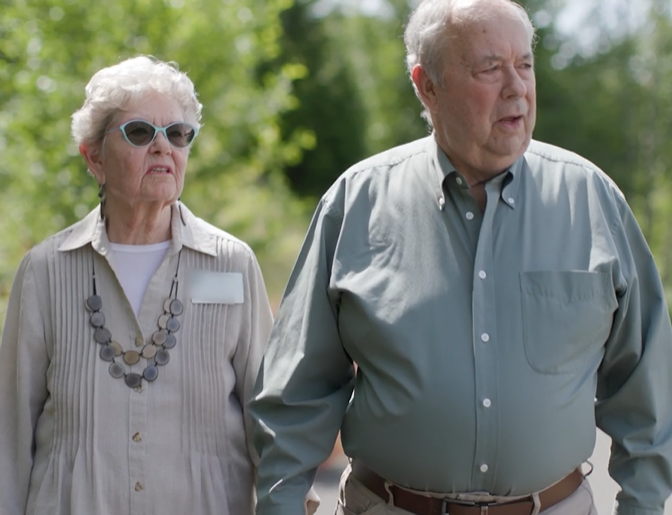
A former Bainbridge Island resident, Bill was living with his wife in what he considered his dream home. Moving to a senior living community wasn’t on his radar.
Then his sister began looking for a community.
Bill and his wife joined her for a tour of Heron’s Key, a Life Plan Community in Gig Harbor, Washington. They came to help his sister explore her options, but something unexpected happened along the way.
Bill and his wife fell in love with Heron’s Key. In fact, they made their decision to move before his sister made hers.
It’s a story we hear in different forms from residents who discover that planning for retirement isn’t necessarily about what they’re giving up. Sometimes it’s about what they didn’t realize they could gain: new friendships, new interests, new opportunities and a community of people who continue to be curious about the world around them.
Bill didn’t leave his curiosity behind on Bainbridge Island. At Heron’s Key, he found an entirely new place to put it to work.
What Does Lifelong Learning Look Like at Heron’s Key?
Today, Bill is the primary facilitator of the Lifelong Learning Collective at Heron’s Key, a seven-member resident-led team creating approximately 200 educational experiences every year.
About 150 of those programs are documentaries and online courses available through the community’s HKTV channel. Another 50 are in-person presentations held throughout the year.
And here’s what makes the program particularly special:
It is 100% resident-sponsored and driven by resident curiosity.
The Lifelong Learning Collective operates with approximately $15,000 each year in resident donations, giving residents an extraordinary amount of ownership over what they want to explore and learn next.
As Bill explains it, one of the program’s greatest strengths is that it is “ever-evolving to meet our needs and desires.”
If residents are interested in exploring a particular subject and the team determines it can create a meaningful program around it, they find a way to make it happen.
That’s lifelong learning in its truest form.
What Can Residents Learn About? Almost Anything.
The range of topics reflects the diversity of interests and experiences found throughout Heron’s Key.
Each month, the Lifelong Learning Collective welcomes a speaker through Humanities Washington, bringing experts and thought-provoking conversations directly to residents.
The group also produces a popular program called Who Am I?, which gives Heron’s Key residents an opportunity to share their own stories, expertise and experiences with their neighbors. One upcoming program, The Writers Next Door, will feature a panel of resident authors discussing their experiences and offering insights into what it takes to become a published author.
The Collective also presented all eight Great Decisions topics this year, with most discussions moderated by individuals affiliated with the University of Washington’s Jackson School of International Studies.
And the learning doesn’t stop there.
From the James Webb Space Telescope to World Affairs
A single month at Heron’s Key demonstrates just how broad lifelong learning can be.
September’s programs include discussions about the origins and history of communism, digital wellness and “doomscrolling,” resident authors and publishing, discoveries from the James Webb Space Telescope, the history and geopolitics of the Levant, and the evolution and characteristics of capitalism.
Presenters include residents themselves as well as outside experts, professors and community leaders.
For Bill, the goal isn’t simply filling a calendar with lectures. It’s about connecting curiosity with opportunities to explore it.
That is how the idea of a “Learning Connection” came to life, as he describes it, the program connects ideas with concrete ways of feeding residents’ curiosity.
Why Is Lifelong Learning Important in Retirement?
Retirement can provide something many people have spent decades wishing they had more of: time to explore what interests them.
For some people, that might mean finally learning more about astronomy. For others, it could mean studying history, understanding world affairs, discussing literature, exploring technology or hearing the fascinating life story of the person who lives down the hall.
At Heron’s Key, lifelong learning is particularly meaningful because residents aren’t simply participating in programs someone else has selected for them.
They are creating them.
Residents identify topics. Residents help find speakers. Residents facilitate discussions. Residents donate the funds that make the programs possible. And residents continually reshape the program based on what their community wants to learn next.
That level of involvement creates opportunities not only for intellectual engagement, but also for leadership, purpose and connection.
Healthy Aging Can Begin With Staying Curious
Bill came to Heron’s Key because his sister was looking for a community.
He wasn’t looking to move. He already had his dream home.
What he discovered was that a new home could offer something he hadn’t necessarily been searching for: an opportunity to help create a community of lifelong learners.
Today, Bill isn’t simply attending programs at Heron’s Key. He’s helping build them, connecting his neighbors with new ideas and making sure curiosity continues to have a place on the calendar.
His story is a wonderful reminder during Healthy Aging Month that growing older doesn’t mean becoming less interested in the world.
Quite the opposite.
There are always more questions to ask, more people to meet, more perspectives to consider, and more things to discover.
Because curiosity never retires.