

Beyond Memory Loss, with The Dementia Whisperer, October 22

What Happens If I Need Care at Heron’s Key?

What Happens If I Need Care at Heron’s Key?

For many people considering a retirement community, one question matters just as much as where they want to live today:


What happens if I need more care later?

Heron’s Key is a Type A Life Care Community in Gig Harbor, Washington, offering Independent Living along with Assisted Living, Memory Care, Skilled Nursing and Rehabilitation on one campus.

For residents who enter Heron’s Key under our Life Care contract, access to higher levels of care is built into the plan. If your health needs change, our team helps determine the appropriate level of support and coordinates the transition with you and your family or responsible party.


Even more importantly, your need for additional care does not mean suddenly facing market-rate assisted living, memory care or skilled nursing costs. Life Plan residents who transition to Penrose Harbor continue paying the applicable monthly fee under their Life Care contract, with only a small additional charge for meals.


That is one of the most important differences between simply choosing a place to live and choosing a plan for your future.
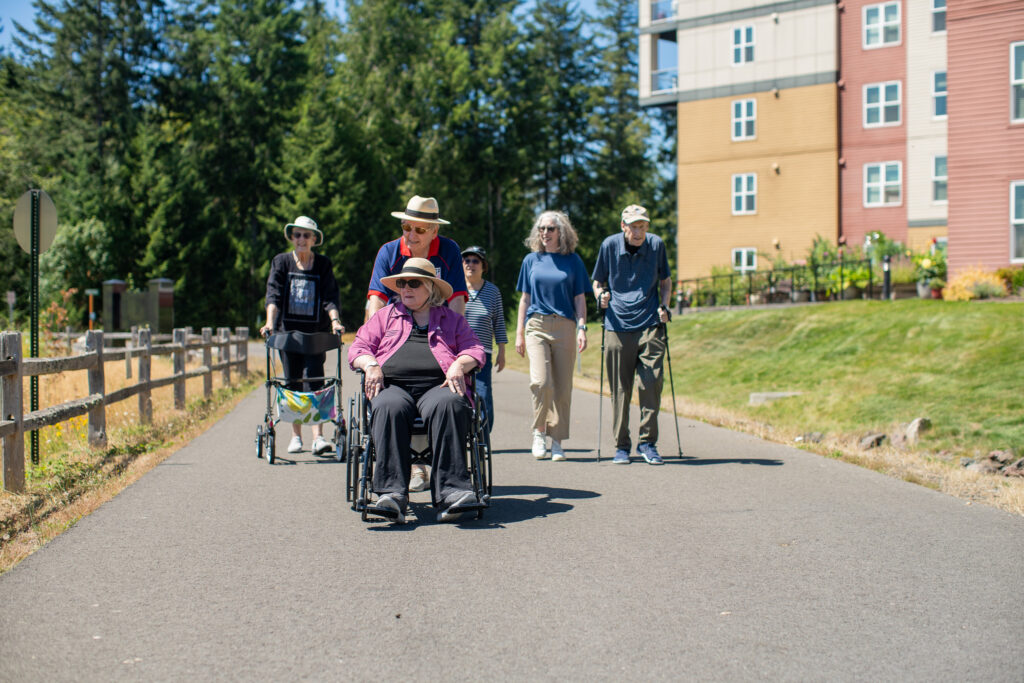
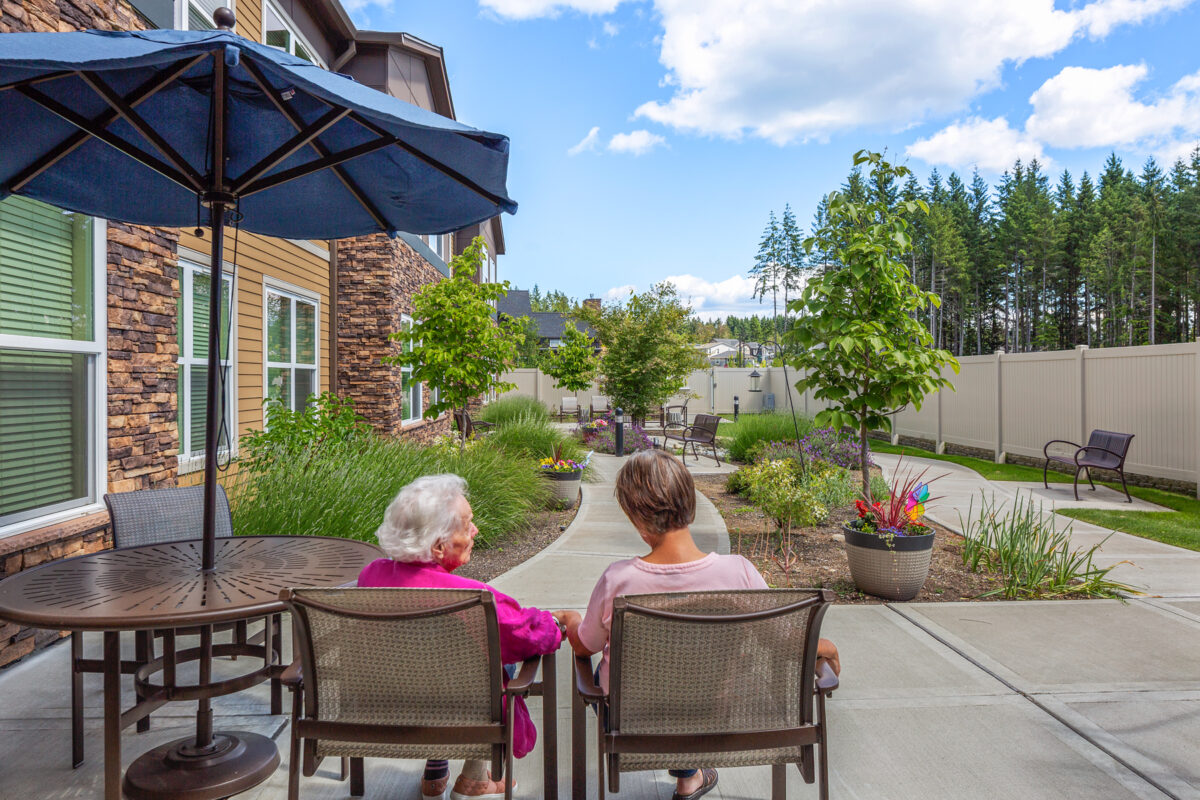
Residents of our different levels of care enjoy a walk around the pond that surrounds Heron's Key.


A Full Continuum of Care at Heron’s Key

Our goal is to help residents enjoy Independent Living for as long as possible while knowing additional support is available if it is ever needed.

Our on-campus continuum of care at Penrose Harbor includes:

  • Assisted Living
  • Memory Care at The Lighthouse
  • Skilled Nursing
  • Short-Term Rehabilitation
  • Long-Term Nursing Care
  • Physical, occupational and speech therapy

Instead of having to start searching for care during a health crisis, our Life Plan residents have priority access to care within the Heron’s Key community.


Frequently Asked Questions About Care at Heron’s Key

What happens if I need Assisted Living at Heron’s Key?

If your needs change, our team will work with you, your physician as appropriate, and your family or responsible party to evaluate the level of support you need.


If Assisted Living is the appropriate setting, you can transition from Independent Living to Penrose Harbor, our on-campus health care setting.


Heron’s Key offers 36 private one-bedroom Assisted Living apartments and support with activities of daily living such as medication management, bathing, dressing and other personal needs.


For Life Plan residents, the cost of care services is included under the terms of the Life Care contract. A small additional charge applies for meals.

Can I move from Independent Living to Assisted Living?

Yes. Heron’s Key residents receive priority access to Assisted Living at Heron’s Key.


Availability can vary. If you need Assisted Living and an apartment is not immediately available, our team will work with you to determine an appropriate temporary care setting until an Assisted Living apartment becomes available.


The important distinction is that you are already part of a community designed to provide a continuum of care as your needs change.


Does Heron’s Key have Memory Care?

Yes. The Lighthouse at Heron’s Key provides on-site Memory Care in an intimate, secure environment with 13 private suites.


The program is designed for individuals living with Alzheimer’s disease and other forms of dementia and includes specialized support, programming and 24-hour supervision.


For Life Plan residents, Memory Care services are included under the Life Care contract, with an additional charge for meals.


Does Heron’s Key have Skilled Nursing?

Yes. Penrose Harbor includes on-site Skilled Nursing and Rehabilitation with 30 private suites.


Skilled Nursing provides around-the-clock care from licensed professionals for residents who need a higher level of medical support, whether temporarily following an illness, injury or surgery or as part of a long-term care plan.


Having Skilled Nursing on campus means residents can receive additional support while remaining part of the Heron’s Key community.


What happens if my spouse needs care but I don’t?

This is one of the significant advantages of a Life Care community for couples.


If one spouse needs Assisted Living, Memory Care or Skilled Nursing, that spouse can transition to the appropriate care setting while the other spouse continues living in the couple’s Independent Living residential home.


The couple remains part of the same Heron’s Key community and can continue spending time together, sharing meals and participating in appropriate activities whenever possible.


Under our Life Care contract, moving one spouse to a higher level of care does not mean paying a second market-rate care bill. There is only an additional charge for the meals provided to the spouse living in the care setting.


Can couples stay together if one person needs more care?

Our priority is making sure each person receives care in the setting that safely meets their individual needs.


If one spouse requires Assisted Living, Memory Care or Skilled Nursing while the other remains independent, they may live in different residential settings within Heron’s Key.


In some circumstances, an independent spouse may choose to move from Independent Living to live with a spouse who requires a higher level of care, when the care setting, licensing requirements and individual circumstances allow.


Our team works closely with couples and families to discuss their options and help determine the best arrangement.


Can I hire in-home care while living in Independent Living?

Heron’s Key’s Life Care contract provides higher levels of care in our licensed care settings rather than providing private in-home caregivers in Independent Living.


In some circumstances, residents may choose to hire private in-home care, including residents who want to use benefits available through a long-term care insurance policy.


Private caregivers are subject to Heron’s Key management approval and must meet applicable credentialing, background-check and other requirements. Our first priority is always the safety, dignity and well-being of our residents.


If a resident’s needs can no longer be safely or appropriately met in Independent Living, our team will work with the resident and family to determine the appropriate level of care within the community.


Is rehabilitation available at Heron’s Key?

Yes. Rehabilitation and therapy services are available at Penrose Harbor, including physical, occupational and speech therapy.

Medicare Part A may cover eligible short-term Skilled Nursing Facility care for up to 100 days per benefit period when Medicare’s requirements are met. Coverage and out-of-pocket costs depend on eligibility, length of stay, insurance and other factors.


Heron’s Key Life Plan residents also receive a lifetime benefit of 90 additional days of care during their residency, providing another layer of support when short-term care is needed.


This can be especially valuable following a hospitalization, illness, injury or surgery because residents can receive rehabilitation on the Heron’s Key campus rather than recovering at an unfamiliar community.


Can I age in place at Heron’s Key?

Yes, but at Heron’s Key we think about “aging in place” a little differently.


Aging in place doesn’t necessarily mean remaining in the exact same apartment regardless of how your health changes. It means remaining within the community you know, surrounded by familiar people and resources, while receiving the level of care that is appropriate for you.


Our continuum includes Independent Living, Assisted Living, Memory Care, Skilled Nursing and Rehabilitation. That means your address within the campus may change, but Heron’s Key can remain your community and your home.


Do I have to leave Heron’s Key if my health changes?

In most circumstances, our continuum of care allows us to support residents even as their health needs change. There are, however, certain medical, behavioral or safety needs that may fall outside our licensing or clinical capabilities. Heron’s Key does not operate a geropsychiatric or behavioral health facility.


In the rare circumstance that we cannot safely or legally provide the care a resident requires, our team will work with the resident, family or responsible party to help determine an appropriate care plan.


Does my monthly fee increase if I need more care?

For Life Plan residents, moving to a higher level of care does not result in paying the market rate for Assisted Living, Memory Care or Skilled Nursing.


Instead, the Life Care contract is designed to provide access to higher levels of care at a predictable cost. Residents who transition from Independent Living to Penrose Harbor continue under the financial terms of their Life Care agreement, with a small additional charge for meals.


Like most senior living communities, Heron’s Key evaluates its monthly service fees annually, and residents may experience normal annual adjustments to their monthly fees.

The key difference is that needing Assisted Living, Memory Care or Skilled Nursing does not trigger a new market-rate monthly care charge.


Life Care Means Planning Before You Need Care

It can be difficult to predict what kind of care you may need five, 10 or 20 years from now. That’s exactly why Life Care exists.


Rather than waiting for a health event and asking your family to find care, compare communities, determine availability and figure out how to pay for it, you can put a plan in place while you’re healthy and independent.


At Heron’s Key, you can enjoy Independent Living today knowing Assisted Living, Memory Care, Rehabilitation and Skilled Nursing are available on the same Gig Harbor campus if your needs change.


You may not know what care you’ll need in the future. But you can know where you’ll receive it, who will help coordinate it, and how you’ve planned to pay for it.


That’s the peace of mind of Life Care at Heron’s Key.
Communicating with Someone Living with Dementia: Why the Right Words Matter

Communicating with Someone Living with Dementia: Small Changes That Make a Big Difference

Caring for a loved one living with dementia can be one of life’s most challenging journeys. As memory changes, conversations that once felt effortless may suddenly become confusing, emotional, or frustrating—for both the person living with dementia and those who love them.


Families often ask, “Why does every conversation seem so difficult now?”


The answer is that dementia changes how the brain processes information, language, and emotions. What worked for years may no longer be effective. The encouraging news is that small changes in how we communicate can make a meaningful difference.


Learning to communicate with greater patience and understanding can help reduce anxiety, ease challenging behaviors, strengthen relationships, and improve quality of life for everyone involved.


Looking Beyond the Behavior

One of the biggest misconceptions about dementia is that behaviors such as agitation, wandering, repetitive questions, or resistance to care are intentional.


In reality, these behaviors are often a form of communication.


A person living with dementia may be trying to express:

  • Fear or uncertainty
  • Physical discomfort or pain
  • Hunger or thirst
  • Loneliness
  • Overstimulation
  • Fatigue
  • Frustration from not finding the right words

Rather than asking, “How do I stop this behavior?” it can be more helpful to ask:


“What is this person trying to tell me?”


That simple shift in perspective can change the way families respond and often leads to calmer, more meaningful interactions.


Communication That Builds Connection

When someone is confused, our instinct is often to correct them.


“No, that’s not what happened.”


“You already asked me that.”


“Remember…”


Although well-intentioned, these responses can unintentionally increase anxiety because the brain is no longer processing information the same way it once did.


Instead, dementia communication experts recommend:

  • Speak slowly and calmly.
  • Use short, simple sentences.
  • Ask one question at a time.
  • Allow extra time for responses.
  • Maintain eye contact.
  • Focus on feelings rather than facts.
  • Offer reassurance before providing direction.

Validation often works better than correction. When people feel heard and understood, they’re more likely to feel safe, cooperative, and at ease.


The Power of Routine

For someone living with dementia, the world can feel increasingly unpredictable. A consistent daily routine provides familiarity and helps reduce confusion.


Simple routines around waking, meals, exercise, social engagement, and bedtime can help create a greater sense of comfort and confidence.


Many memory care specialists recommend:

  • Keeping consistent wake-up and bedtime schedules
  • Eating meals at the same time each day
  • Incorporating gentle movement or exercise
  • Encouraging regular social interaction
  • Participating in activities that reflect lifelong interests
  • Creating quiet, calming evenings with fewer distractions

Predictability helps reduce anxiety by removing many of the daily decisions that become more difficult as dementia progresses.


Simple Strategies You Can Start Using Today

Families are often surprised that small adjustments can have a significant impact on everyday life.


Some simple strategies include:

  • Reducing background television or noise during conversations
  • Offering simple choices instead of open-ended questions
  • Using visual cues and reminders
  • Maintaining familiar surroundings
  • Celebrating successes rather than correcting mistakes
  • Entering the person’s reality instead of insisting they enter yours

These approaches help preserve dignity while reducing unnecessary conflict and frustration.


Caregivers Need Support Too

Supporting someone living with dementia can be emotionally and physically demanding. Many family caregivers experience stress, grief, guilt, and uncertainty while trying to make the best decisions for someone they love.


The good news is that communication skills can be learned.


With education and practical guidance, families often discover new ways to connect, respond with empathy, and approach challenging situations with greater confidence.


At Heron’s Key, we believe education empowers families. By learning to communicate differently, we can create moments of connection, reduce unnecessary stress, and improve the lives of those living with memory loss. That’s why we’re proud to offer educational opportunities that help families feel more informed and supported.

Join Us for an Educational Seminar at Heron's Key

If you’re caring for a loved one experiencing memory loss or dementia, you’re not alone.


Heron’s Key is proud to welcome nationally recognized dementia educator Laura Wayman, known as The Dementia Whisperer, for an educational seminar designed to help families better understand dementia and communicate with greater confidence and compassion.


During this engaging presentation, you’ll learn:

  • Why certain dementia behaviors occur
  • Communication techniques that reduce anxiety and frustration
  • Practical strategies for creating successful daily routines
  • Ways to support independence while maintaining dignity
  • Helpful tips for reducing caregiver stress
  • Answers to many of the questions families are often afraid to ask

Whether your loved one has recently been diagnosed, has been living with dementia for years, or you’re simply planning ahead, you’ll leave with practical tools you can begin using immediately.


Learn more about the event and reserve your seat today.

Looking for Additional Support?

If your loved one could benefit from a more supportive living environment or specialized memory care, we’re here to help. Heron’s Key currently has limited availability in our Assisted Living and Memory Care neighborhoods.


Our experienced team is available to answer your questions, provide guidance, and help you determine whether Heron’s Key may be the right fit for your family.  Whether you’re planning ahead or navigating an immediate need, we invite you to connect with our team to learn more.

Heron’s Key Earns Holleran Choice Community Award

At Heron’s Key, listening to residents is at the heart of everything we do. That’s why we’re honored to receive the 2026 Choice Community Award from Holleran, a national award recognizing senior living communities with exceptional resident engagement and satisfaction.


This recognition is especially meaningful because it reflects the voices and experiences of the people who call Heron’s Key home. Every other year, residents are invited to participate in Holleran’s Resident Engagement and Satisfaction Survey, providing valuable feedback that helps shape the future of our community. The 2026 survey results placed Heron’s Key among the nation’s highest-performing Life Plan Communities for resident engagement and satisfaction.


“Receiving the Choice Community Award is especially meaningful because it comes directly from the voices of our residents,” said Chris Lucero, Executive Director of Heron’s Key. “This recognition reflects the strong sense of belonging, engagement, and purpose that defines life at Heron’s Key. Our residents inspire us every day, and our team is deeply committed to creating an environment where meaningful relationships flourish and people can thrive. We are honored to be recognized as one of the nation’s most engaging senior living communities.”


Life at Heron’s Key is defined by connection and community. From resident-led interest groups and lifelong learning opportunities to volunteer initiatives, waterfront adventures, and meaningful friendships, there are countless ways for residents to stay engaged and make the most of every day. It’s this welcoming spirit and vibrant lifestyle that make Heron’s Key such a special place to call home.


We’re grateful to our residents for sharing their feedback and helping us continue to build a community where everyone feels welcomed, connected, and valued.


Interested in learning more about life at Heron’s Key? Explore our vibrant community, discover resident stories, and see how we’re helping older adults live with purpose, connection, and confidence.

Heron’s Key Celebrates a Major Milestone with Fitch Rating Recognition

At Heron’s Key, we often talk about planning for the future, embracing new possibilities, and creating a community designed to thrive for generations. This month, we are celebrating an important milestone that reinforces that commitment.

Emerald Communities, the parent organization of Heron’s Key, recently received an A- rating with a Stable Outlook from Fitch Ratings, reaffirming the organization’s financial strength and long-term stability. This year’s recognition is especially meaningful because it marks the first time Heron’s Key was included in the obligated group and received a Fitch rating alongside Emerald Heights.

For us, this is more than a financial score. It is validation of the thoughtful planning, stewardship, and vision that help support the lifestyle and care residents value every day.

Why Does This Matter?

When people choose a Life Plan Community, they are making an important decision about their future. Financial strength matters because it supports the promise of stability and care for life. You can access our 2025 Financial Report here.

Strong ratings help demonstrate an organization’s ability to:

• Invest in community enhancements and future growth
• Maintain long-term financial sustainability
• Support resident services and care
• Deliver confidence and peace of mind for residents and families

Emerald Communities continues to stand among the highest-rated Continuing Care Retirement Communities (CCRCs) and Life Plan Communities in Washington State, reflecting a strong foundation for today and tomorrow.

A Time of Exciting Momentum

The recognition also comes during a period of incredible momentum at Heron’s Key.

Our community has achieved record occupancy levels and continues to see strong demand for our upcoming expansion. With more than 90% of residences already reserved, excitement continues to grow around the future of Heron’s Key.

But numbers only tell part of the story.

The heart of Heron’s Key remains the people who make this community special. Residents bring energy, purpose, curiosity, and connection to everyday life. Through resident-led committees, lifelong learning, volunteerism, wellness programs, and meaningful relationships, our community continues to redefine what retirement can look like.

Looking Ahead

As Emerald Communities continues to grow and evolve, recognitions like this reinforce our confidence in the future.

Every year, the Fitch review serves as a valuable measure of organizational strength, but for us, success is measured in something even greater: the experiences of the people who call Heron’s Key home.

We are proud of this milestone and grateful to our residents, team members, and supporters who help make achievements like this possible.

The best years are still in motion.

To learn more about Heron’s Key and our expansion opportunities, contact our team or explore our community today.