


Beyond Memory Loss, with The Dementia Whisperer, October 22

What Happens If I Need Care at Heron’s Key?

What Happens If I Need Care at Heron’s Key?

For many people considering a retirement community, one question matters just as much as where they want to live today:


What happens if I need more care later?

Heron’s Key is a Type A Life Care Community in Gig Harbor, Washington, offering Independent Living along with Assisted Living, Memory Care, Skilled Nursing and Rehabilitation on one campus.

For residents who enter Heron’s Key under our Life Care contract, access to higher levels of care is built into the plan. If your health needs change, our team helps determine the appropriate level of support and coordinates the transition with you and your family or responsible party.


Even more importantly, your need for additional care does not mean suddenly facing market-rate assisted living, memory care or skilled nursing costs. Life Plan residents who transition to Penrose Harbor continue paying the applicable monthly fee under their Life Care contract, with only a small additional charge for meals.


That is one of the most important differences between simply choosing a place to live and choosing a plan for your future.

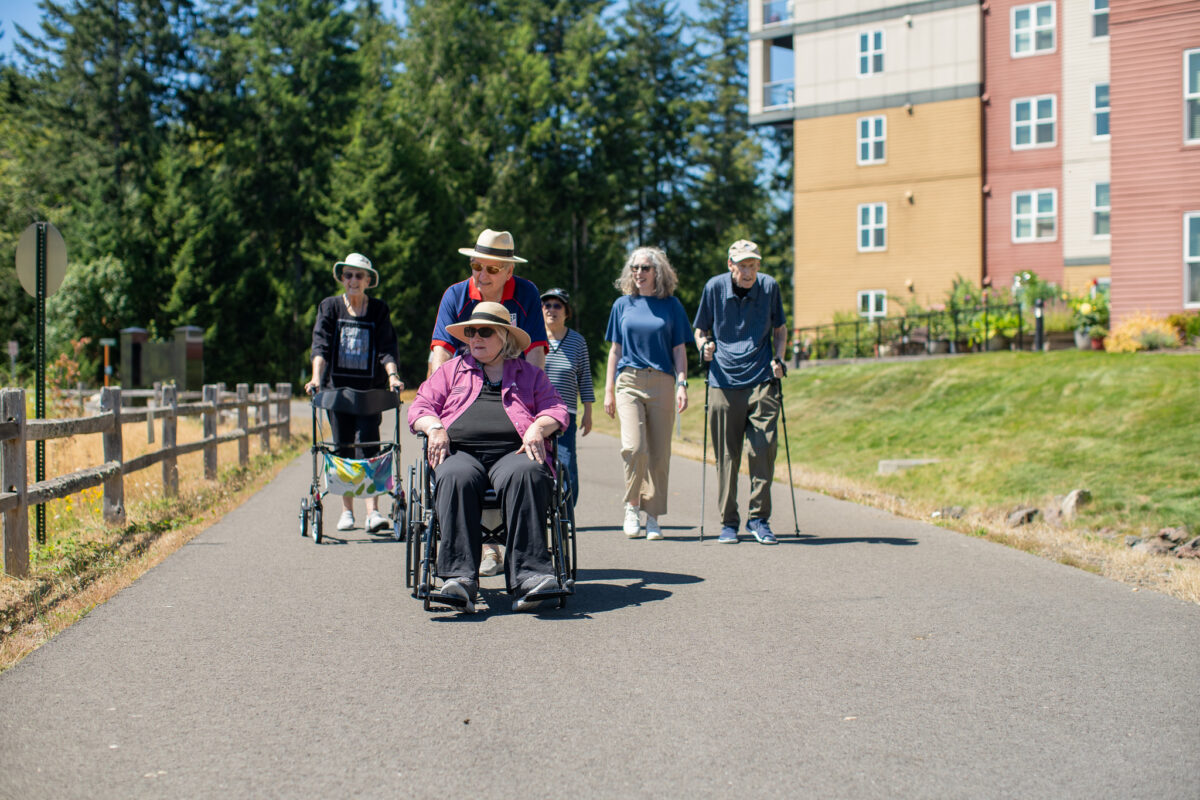
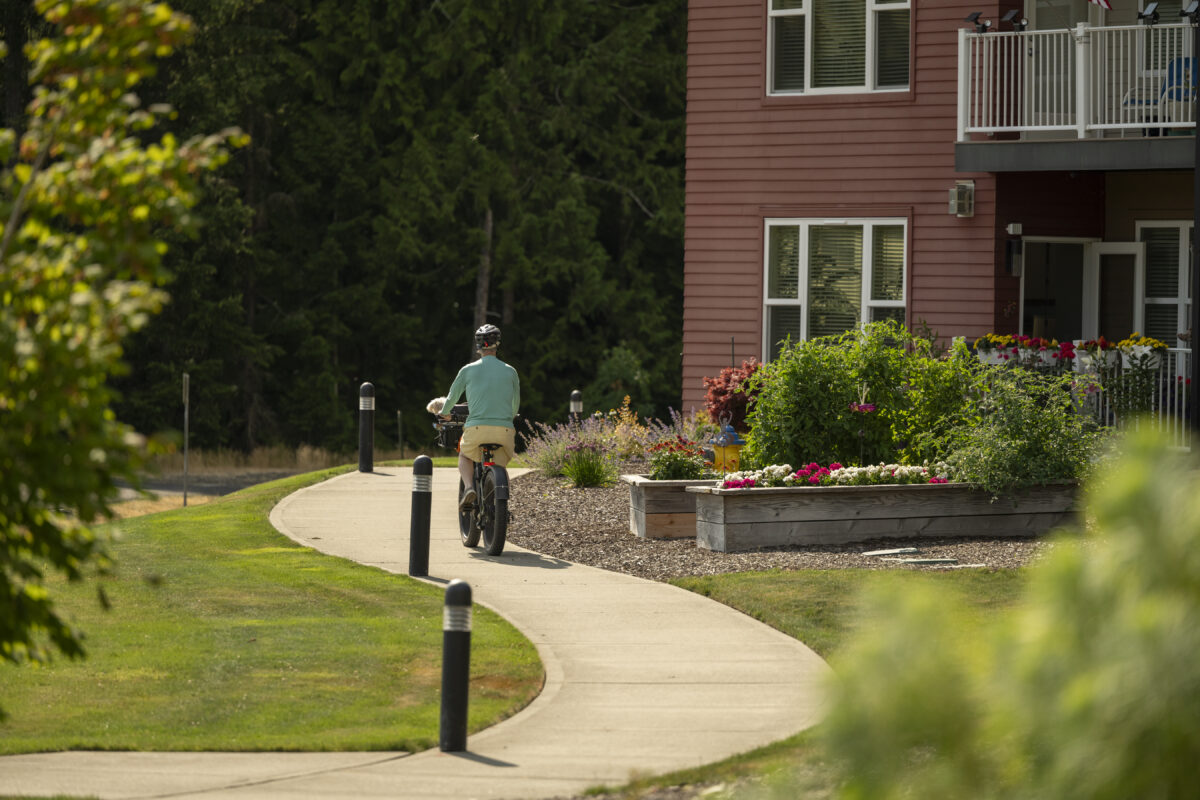
Residents of our different levels of care enjoy a walk around the pond that surrounds Heron's Key.


A Full Continuum of Care at Heron’s Key

Our goal is to help residents enjoy Independent Living for as long as possible while knowing additional support is available if it is ever needed.

Our on-campus continuum of care at Penrose Harbor includes:

  • Assisted Living
  • Memory Care at The Lighthouse
  • Skilled Nursing
  • Short-Term Rehabilitation
  • Long-Term Nursing Care
  • Physical, occupational and speech therapy

Instead of having to start searching for care during a health crisis, our Life Plan residents have priority access to care within the Heron’s Key community.


Frequently Asked Questions About Care at Heron’s Key

What happens if I need Assisted Living at Heron’s Key?

If your needs change, our team will work with you, your physician as appropriate, and your family or responsible party to evaluate the level of support you need.


If Assisted Living is the appropriate setting, you can transition from Independent Living to Penrose Harbor, our on-campus health care setting.


Heron’s Key offers 36 private one-bedroom Assisted Living apartments and support with activities of daily living such as medication management, bathing, dressing and other personal needs.


For Life Plan residents, the cost of care services is included under the terms of the Life Care contract. A small additional charge applies for meals.

Can I move from Independent Living to Assisted Living?

Yes. Heron’s Key residents receive priority access to Assisted Living at Heron’s Key.


Availability can vary. If you need Assisted Living and an apartment is not immediately available, our team will work with you to determine an appropriate temporary care setting until an Assisted Living apartment becomes available.


The important distinction is that you are already part of a community designed to provide a continuum of care as your needs change.


Does Heron’s Key have Memory Care?

Yes. The Lighthouse at Heron’s Key provides on-site Memory Care in an intimate, secure environment with 13 private suites.


The program is designed for individuals living with Alzheimer’s disease and other forms of dementia and includes specialized support, programming and 24-hour supervision.


For Life Plan residents, Memory Care services are included under the Life Care contract, with an additional charge for meals.


Does Heron’s Key have Skilled Nursing?

Yes. Penrose Harbor includes on-site Skilled Nursing and Rehabilitation with 30 private suites.


Skilled Nursing provides around-the-clock care from licensed professionals for residents who need a higher level of medical support, whether temporarily following an illness, injury or surgery or as part of a long-term care plan.


Having Skilled Nursing on campus means residents can receive additional support while remaining part of the Heron’s Key community.


What happens if my spouse needs care but I don’t?

This is one of the significant advantages of a Life Care community for couples.


If one spouse needs Assisted Living, Memory Care or Skilled Nursing, that spouse can transition to the appropriate care setting while the other spouse continues living in the couple’s Independent Living residential home.


The couple remains part of the same Heron’s Key community and can continue spending time together, sharing meals and participating in appropriate activities whenever possible.


Under our Life Care contract, moving one spouse to a higher level of care does not mean paying a second market-rate care bill. There is only an additional charge for the meals provided to the spouse living in the care setting.


Can couples stay together if one person needs more care?

Our priority is making sure each person receives care in the setting that safely meets their individual needs.


If one spouse requires Assisted Living, Memory Care or Skilled Nursing while the other remains independent, they may live in different residential settings within Heron’s Key.


In some circumstances, an independent spouse may choose to move from Independent Living to live with a spouse who requires a higher level of care, when the care setting, licensing requirements and individual circumstances allow.


Our team works closely with couples and families to discuss their options and help determine the best arrangement.


Can I hire in-home care while living in Independent Living?

Heron’s Key’s Life Care contract provides higher levels of care in our licensed care settings rather than providing private in-home caregivers in Independent Living.


In some circumstances, residents may choose to hire private in-home care, including residents who want to use benefits available through a long-term care insurance policy.


Private caregivers are subject to Heron’s Key management approval and must meet applicable credentialing, background-check and other requirements. Our first priority is always the safety, dignity and well-being of our residents.


If a resident’s needs can no longer be safely or appropriately met in Independent Living, our team will work with the resident and family to determine the appropriate level of care within the community.


Is rehabilitation available at Heron’s Key?

Yes. Rehabilitation and therapy services are available at Penrose Harbor, including physical, occupational and speech therapy.

Medicare Part A may cover eligible short-term Skilled Nursing Facility care for up to 100 days per benefit period when Medicare’s requirements are met. Coverage and out-of-pocket costs depend on eligibility, length of stay, insurance and other factors.


Heron’s Key Life Plan residents also receive a lifetime benefit of 90 additional days of care during their residency, providing another layer of support when short-term care is needed.


This can be especially valuable following a hospitalization, illness, injury or surgery because residents can receive rehabilitation on the Heron’s Key campus rather than recovering at an unfamiliar community.


Can I age in place at Heron’s Key?

Yes, but at Heron’s Key we think about “aging in place” a little differently.


Aging in place doesn’t necessarily mean remaining in the exact same apartment regardless of how your health changes. It means remaining within the community you know, surrounded by familiar people and resources, while receiving the level of care that is appropriate for you.


Our continuum includes Independent Living, Assisted Living, Memory Care, Skilled Nursing and Rehabilitation. That means your address within the campus may change, but Heron’s Key can remain your community and your home.


Do I have to leave Heron’s Key if my health changes?

In most circumstances, our continuum of care allows us to support residents even as their health needs change. There are, however, certain medical, behavioral or safety needs that may fall outside our licensing or clinical capabilities. Heron’s Key does not operate a geropsychiatric or behavioral health facility.


In the rare circumstance that we cannot safely or legally provide the care a resident requires, our team will work with the resident, family or responsible party to help determine an appropriate care plan.


Does my monthly fee increase if I need more care?

For Life Plan residents, moving to a higher level of care does not result in paying the market rate for Assisted Living, Memory Care or Skilled Nursing.


Instead, the Life Care contract is designed to provide access to higher levels of care at a predictable cost. Residents who transition from Independent Living to Penrose Harbor continue under the financial terms of their Life Care agreement, with a small additional charge for meals.


Like most senior living communities, Heron’s Key evaluates its monthly service fees annually, and residents may experience normal annual adjustments to their monthly fees.

The key difference is that needing Assisted Living, Memory Care or Skilled Nursing does not trigger a new market-rate monthly care charge.


Life Care Means Planning Before You Need Care

It can be difficult to predict what kind of care you may need five, 10 or 20 years from now. That’s exactly why Life Care exists.


Rather than waiting for a health event and asking your family to find care, compare communities, determine availability and figure out how to pay for it, you can put a plan in place while you’re healthy and independent.


At Heron’s Key, you can enjoy Independent Living today knowing Assisted Living, Memory Care, Rehabilitation and Skilled Nursing are available on the same Gig Harbor campus if your needs change.


You may not know what care you’ll need in the future. But you can know where you’ll receive it, who will help coordinate it, and how you’ve planned to pay for it.


That’s the peace of mind of Life Care at Heron’s Key.

Navigating Life After Retirement: Essential Tips for Seniors in Gig Harbor

Healthy aging isn’t only about staying physically active. Staying curious, continuing to learn, building relationships and having a sense of purpose can be equally important parts of a fulfilling retirement.


This September, in recognition of Healthy Aging Month, we’re celebrating the many ways residents at Heron’s Key continue to learn, lead, connect and discover what’s next.


For resident Bill Sams, that story started with a visit he wasn’t even making for himself.

Sometimes the Best Moves Are the Ones You Never Planned


A former Bainbridge Island resident, Bill was living with his wife in what he considered his dream home. Moving to a senior living community wasn’t on his radar.


Then his sister began looking for a community.


Bill and his wife joined her for a tour of Heron’s Key, a Life Plan Community in Gig Harbor, Washington. They came to help his sister explore her options, but something unexpected happened along the way.


Bill and his wife fell in love with Heron’s Key. In fact, they made their decision to move before his sister made hers.


It’s a story we hear in different forms from residents who discover that planning for retirement isn’t necessarily about what they’re giving up. Sometimes it’s about what they didn’t realize they could gain: new friendships, new interests, new opportunities and a community of people who continue to be curious about the world around them.


Bill didn’t leave his curiosity behind on Bainbridge Island. At Heron’s Key, he found an entirely new place to put it to work.


What Does Lifelong Learning Look Like at Heron’s Key?


Today, Bill is the primary facilitator of the Lifelong Learning Collective at Heron’s Key, a seven-member resident-led team creating approximately 200 educational experiences every year.


About 150 of those programs are documentaries and online courses available through the community’s HKTV channel. Another 50 are in-person presentations held throughout the year.


And here’s what makes the program particularly special:


It is 100% resident-sponsored and driven by resident curiosity.


The Lifelong Learning Collective operates with approximately $15,000 each year in resident donations, giving residents an extraordinary amount of ownership over what they want to explore and learn next.


As Bill explains it, one of the program’s greatest strengths is that it is “ever-evolving to meet our needs and desires.”


If residents are interested in exploring a particular subject and the team determines it can create a meaningful program around it, they find a way to make it happen.


That’s lifelong learning in its truest form.


What Can Residents Learn About? Almost Anything.


The range of topics reflects the diversity of interests and experiences found throughout Heron’s Key.


Each month, the Lifelong Learning Collective welcomes a speaker through Humanities Washington, bringing experts and thought-provoking conversations directly to residents.


The group also produces a popular program called Who Am I?, which gives Heron’s Key residents an opportunity to share their own stories, expertise and experiences with their neighbors. One upcoming program, The Writers Next Door, will feature a panel of resident authors discussing their experiences and offering insights into what it takes to become a published author.


The Collective also presented all eight Great Decisions topics this year, with most discussions moderated by individuals affiliated with the University of Washington’s Jackson School of International Studies.


And the learning doesn’t stop there.


From the James Webb Space Telescope to World Affairs


A single month at Heron’s Key demonstrates just how broad lifelong learning can be.


September’s programs include discussions about the origins and history of communism, digital wellness and “doomscrolling,” resident authors and publishing, discoveries from the James Webb Space Telescope, the history and geopolitics of the Levant, and the evolution and characteristics of capitalism.


Presenters include residents themselves as well as outside experts, professors and community leaders.


For Bill, the goal isn’t simply filling a calendar with lectures. It’s about connecting curiosity with opportunities to explore it.


That is how the idea of a “Learning Connection” came to life, as he describes it, the program connects ideas with concrete ways of feeding residents’ curiosity.

Why Is Lifelong Learning Important in Retirement?


Retirement can provide something many people have spent decades wishing they had more of: time to explore what interests them.


For some people, that might mean finally learning more about astronomy. For others, it could mean studying history, understanding world affairs, discussing literature, exploring technology or hearing the fascinating life story of the person who lives down the hall.


At Heron’s Key, lifelong learning is particularly meaningful because residents aren’t simply participating in programs someone else has selected for them.


They are creating them.


Residents identify topics. Residents help find speakers. Residents facilitate discussions. Residents donate the funds that make the programs possible. And residents continually reshape the program based on what their community wants to learn next.


That level of involvement creates opportunities not only for intellectual engagement, but also for leadership, purpose and connection.


Healthy Aging Can Begin With Staying Curious


Bill came to Heron’s Key because his sister was looking for a community.


He wasn’t looking to move. He already had his dream home.


What he discovered was that a new home could offer something he hadn’t necessarily been searching for: an opportunity to help create a community of lifelong learners.


Today, Bill isn’t simply attending programs at Heron’s Key. He’s helping build them, connecting his neighbors with new ideas and making sure curiosity continues to have a place on the calendar.


His story is a wonderful reminder during Healthy Aging Month that growing older doesn’t mean becoming less interested in the world.


Quite the opposite.


There are always more questions to ask, more people to meet, more perspectives to consider, and more things to discover.


Because curiosity never retires.

Heron’s Key Celebrates a Major Milestone with Fitch Rating Recognition

At Heron’s Key, we often talk about planning for the future, embracing new possibilities, and creating a community designed to thrive for generations. This month, we are celebrating an important milestone that reinforces that commitment.

Emerald Communities, the parent organization of Heron’s Key, recently received an A- rating with a Stable Outlook from Fitch Ratings, reaffirming the organization’s financial strength and long-term stability. This year’s recognition is especially meaningful because it marks the first time Heron’s Key was included in the obligated group and received a Fitch rating alongside Emerald Heights.

For us, this is more than a financial score. It is validation of the thoughtful planning, stewardship, and vision that help support the lifestyle and care residents value every day.

Why Does This Matter?

When people choose a Life Plan Community, they are making an important decision about their future. Financial strength matters because it supports the promise of stability and care for life. You can access our 2025 Financial Report here.

Strong ratings help demonstrate an organization’s ability to:

• Invest in community enhancements and future growth
• Maintain long-term financial sustainability
• Support resident services and care
• Deliver confidence and peace of mind for residents and families

Emerald Communities continues to stand among the highest-rated Continuing Care Retirement Communities (CCRCs) and Life Plan Communities in Washington State, reflecting a strong foundation for today and tomorrow.

A Time of Exciting Momentum

The recognition also comes during a period of incredible momentum at Heron’s Key.

Our community has achieved record occupancy levels and continues to see strong demand for our upcoming expansion. With more than 90% of residences already reserved, excitement continues to grow around the future of Heron’s Key.

But numbers only tell part of the story.

The heart of Heron’s Key remains the people who make this community special. Residents bring energy, purpose, curiosity, and connection to everyday life. Through resident-led committees, lifelong learning, volunteerism, wellness programs, and meaningful relationships, our community continues to redefine what retirement can look like.

Looking Ahead

As Emerald Communities continues to grow and evolve, recognitions like this reinforce our confidence in the future.

Every year, the Fitch review serves as a valuable measure of organizational strength, but for us, success is measured in something even greater: the experiences of the people who call Heron’s Key home.

We are proud of this milestone and grateful to our residents, team members, and supporters who help make achievements like this possible.

The best years are still in motion.

To learn more about Heron’s Key and our expansion opportunities, contact our team or explore our community today.

The Benefits of Hiring a Senior Move Manager for Your Next Move

Moving is one of life’s biggest transitions. For older adults, it can also come with emotional, physical, and logistical challenges. Whether downsizing from a longtime family home, relocating closer to loved ones, or moving into a Life Plan Community such as Heron’s Key, the process can feel overwhelming.

“We understand that moving can feel overwhelming, which is why we are proud to provide a trusted list of resources that have helped many of our residents simplify the process. From senior move managers to downsizing specialists and movers, these professionals can help turn what feels stressful into a smoother, more confident transition.”
— Sandra Cook, Vice President of Marketing & Public Relations, Emerald Communities

That is where a Senior Move Manager can make all the difference.

A Senior Move Manager is a professional who specializes in helping older adults and their families organize, downsize, relocate, and settle into a new home with less stress and more confidence. According to the National Association of Senior & Specialty Move Managers (NASMM), these professionals provide customized support for later-life transitions. (NASMM)

What Does a Senior Move Manager Do?

Unlike a traditional moving company that primarily transports boxes and furniture, a Senior Move Manager often assists with the entire transition process, including:

  • Creating a personalized move plan
  • Sorting and downsizing belongings
  • Coordinating movers, packers, and storage
  • Helping donate, sell, or distribute items
  • Designing furniture layouts for the new home
  • Supervising packing and move day logistics
  • Unpacking and setting up the new residence
  • Making the new home feel comfortable and familiar (NASMM)

7 Benefits of Hiring a Senior Move Manager

1. Reduces Stress and Anxiety

Leaving a longtime home can be emotional. Memories are tied to every room, and change can feel uncertain. Senior Move Managers understand the emotional side of moving and help guide the process with patience, empathy, and reassurance.

They help turn a stressful move into a manageable transition.

2. Saves Time and Energy

Sorting through decades of belongings takes time. Coordinating vendors, movers, donations, and schedules can quickly become a full-time job.

A Senior Move Manager creates a clear plan, keeps everything organized, and handles details that can otherwise consume weeks or months. (NASMM)

3. Helps with Downsizing Decisions

One of the hardest parts of moving is deciding what to keep.

Senior Move Managers are skilled at helping older adults prioritize what matters most while respectfully letting go of items that no longer fit the next chapter of life.

They also know where to donate, consign, recycle, or responsibly dispose of belongings.

4. Protects Family Relationships

Adult children often want to help, but emotions and differing opinions can create tension.

A neutral professional can reduce family stress by guiding decisions objectively, managing timelines, and allowing family members to focus on support rather than logistics. (Care.com)

5. Creates a Safer Move

Packing, lifting, climbing stairs, and rushing through a move can increase risk of injury.

Senior Move Managers help older adults avoid unnecessary strain and often coordinate insured professionals for packing and transport. (NASMM)

6. Helps the New Home Feel Like Home Faster

Move day is only part of the process. The real success is feeling settled afterward.

Many Senior Move Managers help arrange furniture, hang artwork, organize kitchens, and recreate familiar spaces so the new residence feels welcoming from day one.

7. Ideal for Long-Distance Families

When loved ones live in another city or state, managing a move remotely can feel impossible.

A Senior Move Manager can act as a trusted local partner, keeping everyone informed and ensuring nothing is overlooked.

How to Choose the Right Senior Move Manager

Look for someone who is:

  • Experienced with older adult moves
  • Patient and compassionate
  • Transparent about pricing
  • Well-reviewed locally
  • Properly insured
  • Affiliated with professional organizations such as NASMM (NASMM)

You can search for professionals through the NASMM directory here: Find a Senior Move Manager

When Is the Right Time to Hire One?

Consider hiring a Senior Move Manager when:

  • A home has become too large to maintain
  • Health needs are changing
  • A move to independent living or assisted living is planned
  • Family support is limited
  • Downsizing feels overwhelming
  • You want a smoother, more organized transition

Final Thoughts

Moving later in life does not have to be chaotic or stressful. With the right support, it can be empowering.

A Senior Move Manager helps older adults move with dignity, organization, and peace of mind, allowing them to focus less on boxes and more on the opportunities ahead.

Understanding the Financial and Health Assessment at Heron’s Key

Heron’s Key  ·  Care for Life

Two important parts of becoming a resident and what to expect

“At Heron’s Key, we promise something very different from most retirement communities: care for life. Because we make that commitment, we take the time upfront to be sure we can truly support each resident, today and decades from now.”

Why We Ask: Personal Questions Asked with Purpose

We ask personal questions not out of curiosity, but out of responsibility. These assessments support a promise that extends beyond your first months here and into the future, including Assisted Living and Skilled Nursing if and when you may need them.

Because Heron’s Key provides care for life, we plan not just for each individual but for the entire community over time.

In practice, our assessments help us:

  • Ensure we can meet your needs over time as you move through levels of care
  • Plan responsibly for staffing, services, and care availability
  • Protect the long-term stability of the entire community
  • Maintain fairness and predictability for all residents

How It Helps You: Designed to Support Your Future

The assessment isn’t a hurdle. It is the mechanism that makes our “care for life” commitment possible. When we understand your full picture, we can say yes with confidence.

  • You won’t outlive your resources or your care
  • Care is there when you need it, without unexpected disruptions
  • Monthly fees stay as stable and predictable as possible
  • The community remains financially strong and mission-driven

Privacy & Fairness: How Your Information is Handled

We understand these are personal questions, and we take that responsibility seriously. Here’s how we handle everything you share with us:

  • All information is kept strictly confidential
  • Questions are asked consistently and fairly of all prospective residents
  • The goal is alignment, not exclusion
  • This process reflects the long-term nature of a Life Plan contract

This is not a standard rental decision. It’s a shared, long-term commitment.

“Our goal is not only to welcome you in, but to care for you well over time. This process helps ensure we can do exactly that.”

Good to know

Your completed assessment is valid for 60 days. If you choose not to move in within that window, or if your apartment modifications take longer, we may ask you to complete a new assessment before move-in.