


Holiday Open House, Tuesday, December 2nd 

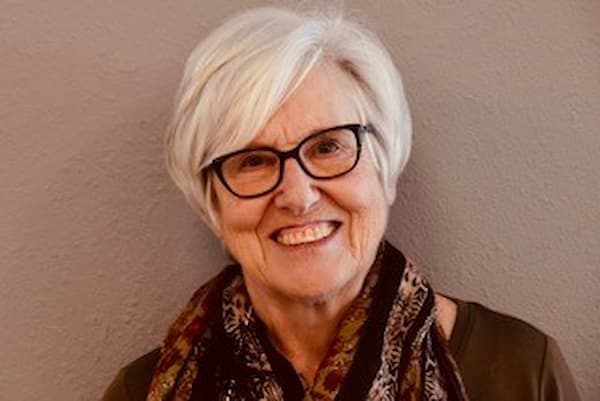
Meet Janel Berosh

About two years ago, Janel Berosh was working as office manager for a local Washington print shop when she met some of the kindest people she ever knew.

janel berosh

The people she met were employees of Heron’s Key using the print services. After creating rapport, Janel learned about the great work at Heron’s Key and heard about how much these folks enjoy their jobs. Janel was ready for a change and after discovering all the great things about Heron’s Key, she knew that’s where she wanted to be.

In 2021, Janel was officially hired by Heron’s Key as a concierge. In this role, Janel managed the front desk, helped residents in many facets, and supported the rest of the staff.

After exceling in this role, Janel was promoted to executive assistant. Now she schedules meetings between residents, staff and Katie Houck, the Heron’s Key executive director. She also manages monthly banking information and invoices, orders needed supplies, coordinates events, creates presentations for meetings and much more.

“I thoroughly enjoy working in an environment where I can help others,” says Janel. “I’m so grateful for Heron’s Key and the opportunities of growth that they offer here. It has been a great learning experience and I have enjoyed every bit of it.”

When Janel is not working, she loves being outside in nature and going on hikes. She also enjoys volunteering in the community and exploring the beautiful town of Gig Harbor.

She has been a resident of Gig Harbor since 1980 where she built a life with her husband Steve, raised her three daughters and adopted three cats.

“Joining Heron’s Key has brought a lot of happiness to my already wonderful life,” added Janel. “The residents and staff at Herons’ Key are caring and respectful to one another. I love to hear others’ life stories. Everyone has a story and it makes us all who we are today.”

Janel loves to laugh and believes it is a great outlet to making life better. If you ever have a good story or a funny joke to tell, Janel is the perfect person to go to!

Downsizing and Rightsizing Aren’t Just for Seniors Moving to a Retirement Community

Most older adults who are planning to move to a senior living community will need to sort through their belongings and decide what goes with them and what does not.

While this is most commonly referred to as downsizing—because the move is usually to a smaller home—rightsizing may be a more accurate term, and it applies to a broad range of situations.

What Is Rightsizing, and How Does It Differ From Downsizing?

Some say there’s no real difference between rightsizing and downsizing, that it’s simply a matter of perspective. Others believe there’s a distinct difference between the two.

Downsizing, for seniors or anyone else, involves letting go of possessions accumulated over the years, from furniture and household accessories to collectibles and memorabilia. The goal is to whittle down one’s belongings so that what remains will fit into a living space with less square footage.

Because it’s associated with moving, the term downsizing can have negative connotations. People seldom look forward to the process of packing and moving, which can seem overwhelming at any age. For those who’ve lived in the same home for decades, raising a family and establishing deep roots within the community, the mere thought of going through the steps to move somewhere else can be daunting.

Rarely does everything in a household get packed and transported to a new home. So, in a way, downsizing is part of every move. Rightsizing should be, too.

Rightsizing involves evaluating your lifestyle, now and in the five to 10 years ahead, and then determining how well your home and possessions suit your lifestyle. It’s a process of deciding how much you value your tangible belongings and whether they’re serving a purpose in your life.

Here’s another point that highlights the difference between rightsizing and downsizing: Rightsizing might mean moving into a larger space. For instance, if you plan on entertaining guests in your home more often in the future or inviting friends and family for extended visits, you may need more space than you currently have.

When Should You Consider Rightsizing?

Rightsizing can be beneficial whether you’re approaching retirement, starting a family, moving to a new city for your career or doing some serious spring cleaning. While it’s good to rightsize any time you move, it can be advantageous to rightsize periodically even if you’re staying put. It’s a great way to prevent clutter from taking over your space and your life.

When you’re planning to move, you can’t start rightsizing too soon. The more time you give yourself to go through your closets, cabinets and other storage spaces such as attics and basements, the less stressed you’ll be as moving day draws near. You can take a more leisurely pace, donating a few batches of items every so often and passing along treasured belongings to friends and family when you get together with them.

If you try thinking about rightsizing in terms of the outcome—a home that better aligns with the way you want to live—you may be excited to get the process underway!

Tips to Help Seniors Downsize or Rightsize

While many of these tips will come in handy for anyone who wants to clear out the clutter, some are especially relevant for older adults who are planning to move to a senior living community.

  • Start with an easy space in your home or with items you’re sure you no longer want. For example, go through your linen closet. Anything you haven’t used in the past year is a good candidate for the donation pile. Making good progress early on will keep you motivated.
  • Be honest with yourself when considering what to keep. Is it something you will use, or does it have true sentimental value? People often hold on to things out of a sense of obligation or because they would feel guilty giving (or throwing) them away. This is a good time to set some of those emotions aside and be as objective as possible. Items such as video tapes and photo albums can be digitized, which frees up space while keeping them accessible. (A tech-savvy friend or relative may be able to help you with this, and there are companies that do this, too.) If you have a lot of collectibles, consider taking photos of them to enjoy and then donating or selling the items themselves.
  • Ask for a floor plan of your new home with measurements. This will be extremely helpful in deciding what to keep. As much as you may love your bed, if it won’t fit in the new space then that’s an easy decision to make.
  • Allocate items to either a yes/keep pile or a no/don’t keep pile. By limiting your “maybes,” the overall process will be more efficient. To further streamline the process, create “yes” and “no” boxes and place items in the appropriate boxes as you sort. This will also help you stick with your decisions, especially if you seal each box when it’s full.
  • Label your boxes clearly. In addition to identifying what’s in the box, number the boxes (e.g., “kitchenware, box 1 of 5”). This will help the movers know where to place the boxes in your new home and help you know if any boxes are missing.
  • Create a timeline ASAP if you have a specific “move by” date. This step helps ensure you’ll be ready in plenty of time. Be sure to factor in enough time for the moving company to transport your belongings—particularly if you’ll be making a long-distance move, which can take weeks.
  • Know that you can always get help. Asking friends and family for assistance can result in opportunities to create happy memories of the time you’ll share. (For instance, younger family members may enjoy hearing about the history behind photographs and heirlooms.) Professional assistance is available as well. If you’re moving to a senior living community, there’s an excellent chance they can recommend experts to assist you throughout the process, from rightsizing and prepping your home for sale to hiring a dependable moving company.

Benevolent Buys: A Unique Rightsizing Program at Heron’s Key

Oftentimes when residents move from independent living to assisted living, they have furniture and other household goods that won’t fit in their new home. Benevolent Buys, the brainchild of Karen Coles, a resident at Heron’s Key, is a convenient way people can donate those items and help others in the community.

A couple of years before moving to Heron’s Key, Karen started rightsizing by selling items on Facebook Marketplace. After seeing that others in our community had belongings they needed to give away or sell, she decided to use her online selling experience to help them.

She spearheaded Benevolent Buys in January 2022, and the program was a rapid success. While Karen initially did everything herself, other residents soon stepped up to help. These days, an average of nine to 12 volunteers keep the program humming along.

The Benevolent Buys team includes a photographer who also researches the items to find out what they’re worth and writes descriptions. Other team members help with photo shoots or meet buyers when they come to pick up their purchases. Some assist in other ways, like wiping hard drives clean on computers that are posted for sale.

One resident created a website just for Heron’s Key residents so they could see everything that’s available without having to be on Facebook.

For Karen and everyone else on the team, it’s a labor of love because there’s no compensation other than knowing they’re providing a valuable service for the community. All of the proceeds go to the Benevolence Fund, which is used to help residents who may need assistance with community fees later in life.

A Win-Win-Win Situation

As Karen points out, everybody wins with Benevolent Buys. The buyers win because they get great bargains. The residents who own the items win because they have an easy way to donate the things they can no longer use. And, it’s a win for the Benevolence Fund.

The program also creates opportunities for residents who volunteer to serve on the team. Karen notes that most people who move to Heron’s Key have had productive careers and don’t want to just sit around and watch television. She and the rest of the team consider Benevolent Buys a highly worthwhile use of their skills and their time.

As a bonus, Benevolent Buys has been increasing awareness of Heron’s Key. Buyers who aren’t familiar with our community sometimes ask, “What kind of place is this?” They’re pleasantly surprised when they hear the answer.

Is This the Place for You?

If you’re ready to surround yourself with neighbors who enjoy taking the initiative, who seek new experiences and new ways to use their experience, then you’ll fit right in at Heron’s Key.

We encourage you to check out the lifestyle Heron’s Key offers and let us know if you’d like to visit our community in person. We can schedule a time to show you around, or you can join us for an upcoming event. Either way, we’d love to welcome you!

Featured Image: Andy Dean Photography

The Making of Heron’s Key Voices: A Historical Memoir

heron's key voices

Hitting the shelves in March 2023

There are few instances where a community comes together to create something beautiful. At Heron’s Key, however, the passion of residents, past, current and first employees, and the leadership team all played a vital role in creating the soon-to-be-released historical memoir, Heron’s Key Voices.

Marty Beert, resident of Heron’s Key since 2017, led the project, orchestrated interviews, gathered missives and drafted Heron’s Key Voices. Her background as a college professor and superintendent in California and as a published writer, made Marty the logical person to champion the project.

“Almost every resident had a hand in the book,” said Marty. “Heron’s Key Voices shares fun, loving, and inspirational stories from those who lived, worked and created our community. I even shared my own story.”

There are incredible stories in the six-chapter book. Marty’s story is among one of the most romantic. She recounts her life raising two kids, loving her grandkids, making strides in her career, and most of all – her journey in love. Marty lost her first husband to pancreatic cancer after forty amazing years of marriage. Nearly a decade later, she met and fell in love with her second husband while on a trip in Italy.

After many adventures, trips and memories, Marty and her second husband decided to move to Heron’s Key. Her husband had been diagnosed with a terminal disease and a move to Heron’s Key provided the continuum of care needed. They shared one year together in independent living, but as her husband’s health declined, assisted living was a blessing. After a few months in assisted living, Marty’s husband passed in her arms. The community support received by the couple during those difficult times was evidence: – Heron’s Key was the right choice at the right time.

Marty shared her love stories, her life journey and her experiences in the book. Marty’s story is genuine and captivating.

Heron’s Key Voices is not only a retelling of personal experiences but also a history of the community. The book recounts anecdotes of the very first residents and employees through current day. Each chapter begins with a musical metaphor to capture the first five years of Heron’s Key, the story before it opened and experiences/events through the end of 2022.

“Heron’s Key Voices expresses all of our experiences. From staff who took this job on a whim and discovered a passion for senior living to how interest groups were formed and even about the blizzard of 2019 which residents coined as ‘snowmageddon’. The book shares the entire history of Heron’s Key. It is truly a compilation of many perspectives and the voices of the community. The trustees who envisioned the community and all the leaders who led the vision to completion were able to tell their story in Heron’s Key Voices,” added Marty,

It took about a year to interview participants and compile the Heron’s Key Voices memoir. The book is now in the final proofing and pagination stages. Marty believes it will be hitting shelves by the end of March. A dedicated team of residents are taking pre-orders from those interested in receiving a copy of Heron’s Key Voices.

The book is priced at $15 for those placing preorders. For those who purchase a book after printing, the cost will increase to $20. The Heron’s Key benevolent fund will receive profits, if any, from book sales.

This book is one that residents, staff at Heron’s Key and anyone interested in a successful CCRC may find compelling. The memoir will take the reader on a journey, provide insight and lessons, bring a smile to your face and warm your heart.

For those interested in ordering a copy, reach out to Marty by emailing  [email protected].

Creating a community where all can feel safe, welcome and accepted

As one of the younger retirement communities in the Seattle area, we feel it’s incumbent on us to shape Heron’s Key into a community that will appeal not only to today’s seniors but also those who will be looking for a place to call home 10 years from now — and well beyond.

For a variety of reasons, our region attracts a wonderfully diverse array of people. Right here at Heron’s Key, our board members, residents and staff have a fascinating assortment of backgrounds and life experiences, and that diversity will only become more pronounced with time.

The newness of our community gives us ample opportunity and flexibility to sculpt our culture, which is why we’ve been working for the last year or so to solidify a policy of diversity, equity and inclusion, or DEI.

Our journey began with a task force, which morphed into a committee with representatives from both the staff and residents in our community. We’ve laid the groundwork, and now we’re excited about spreading awareness of DEI among all stakeholders at Heron’s Key.

What Do We Mean by Diversity, Equity and Inclusion?

At the highest level, we want to bring greater awareness to the fact that we welcome and honor the unique qualities of all people.

Our ultimate objective is for Heron’s Key to be a safe and accepting space for all community members — our employees, residents and board members — as well as visitors, service providers and anyone else who engages and interacts with our community.

To create that safe and accepting space, we believe it’s important to address all three components of our DEI statement, because they are intertwined.

Diversity: While this includes traits that commonly come to mind when talking about diversity, such as race, religion, age, ethnicity, nationality, language and sexual orientation, we also incorporate other differences people have, from physical and mental abilities to relationship and socioeconomic status.

Equity: By placing an emphasis on equity among individuals, we hope to ensure more than fair treatment for everyone in our community. We also seek to identify and remove inequities that prevent participation, access and opportunities.

Inclusion: For our community to be truly successful, it has to be a place where people feel they belong, where they can feel free to communicate their lived experiences, and trust that their voice will be heard.

Framing Our Intentions and Putting Words Into Action

We wanted to make sure the people who would be developing our DEI commitment statement and building the foundation for greater awareness of DEI would accurately and appropriately represent our community.

The following are thoughts and hopes that several DEI committee members volunteered to share:

Barbara, Resident

Barbara and her husband, Robert, were among the very first residents to move into Heron’s Key. She says she was eager to participate in this group because she and Robert “want a community of people that feel really welcome to express different beliefs and different understandings. It makes [the community] richer.”

Noting the unique opportunity to be part of a committee that includes both staff and residents, she says the committee is working to create an environment “so that people feel comfortable no matter who they are, and that they feel comfortable being who they are.”

“When you start looking through the filter of DEI at all you’re doing and not doing, and saying and not saying, it opens your eyes. I mean, that’s what happened for me. That’s why I’m interested. It’s helpful to consider and look at things in different ways.”

Heidi, Fitness Specialist

Heidi brings a wealth of multicultural perspective to the table. She grew up in a Latino family in New York City, served in the military and has lived and traveled all over the world.

“It’s very interesting that, because we have so many cultures, there is so much more grace,” she says about being on the committee. “It’s a good learning tool for all of us to learn from one another.”

She says the committee has had some very deep discussions that aren’t always easy. “Sometimes important discussions are not comfortable discussions,” she points out. “These are important topics that I don’t think we would be talking about unless we have this group.”

Learning to be more open-minded and accepting is, in a way, like starting to take fitness classes when you haven’t worked out at a gym before, Heidi says.

“It’s a growth for anyone who invests any time in learning about the people around them, because that’s really what this is about. It’s about us learning about who is around in our community, and how can we be better to one another.”

George, Facilities Supervisor

George says he volunteered to be on the committee because he learned about discrimination at an early age: his mother, who moved to the U.S. from Korea, faced discrimination from co-workers.

He says he enjoys participating on the committee because it’s a safe place to talk about differences between people and how that can lead to differences in the way they are treated. The group’s goal, as he sees it, is to help educate and open the minds of people who are willing to listen.

“The more we understand as a society, the more we can be kind and look through somebody else’s eyes,” he says.

Before taking on the role of facilities supervisor, George supervised the staff members who work in housekeeping, janitorial and laundry. He’s had the opportunity to get to know some of the most diverse groups in our community, hear about issues they sometimes run into, and at times even serve as a mentor for those who are looking to advance in one way or another.

Another goal George has for serving on the committee is to encourage people not to be so quick to take things personally and get defensive. Sometimes people say or do things because they have only limited information or they make a false assumption. Rather than closing them down or escalating the situation, it can be used as a learning opportunity.

Katie, Executive Director

Katie stepped into the role of executive director late last summer, so she became involved with the DEI committee after the work was already underway. She says the DEI policy has been welcomed by staff and residents throughout the community, and “our group continues to grow.”

The committee has taken steps to familiarize the rest of the community with its work, she says, noting that the focus so far has mostly been on inclusion. It’s a logical place to start, since we want to be sure that all residents have access to and can participate in what’s going on throughout the community.

One example, Katie notes, was an event that Heidi co-led with Suzi, our spiritual wellness coordinator. Vision goggles were available for residents to wear that simulated different types of low-vision scenarios — wearers could experience what it’s like to have glaucoma, diabetic retinopathy or macular degeneration, for instance. The workshop helped those who participated have a better understanding of what it’s like for people who live with low vision.

Katie wants people to realize that DEI isn’t just about race or gender. People have many kinds of differences, including their physical capabilities. “It’s all-encompassing,” she says.

Only the Beginning

The DEI committee has discussed more events it wants to have this year and other ways to increase awareness. One of the main events the group is planning is a multicultural fair, which will likely take place in late spring or over the summer.

Katie would also like to have someone from the University of Washington come to Heron’s Key to do a lifelong learning presentation on diversity, equity and inclusion.

In the meantime, the committee will work with other staff to integrate the topic of DEI into our orientation programs for new employees and new residents.

And the committee will continue to educate itself, as well. Katie revised the agenda for the committee meetings to include a discussion of a different topic each month. Members of the committee will each take a turn finding an article that’s of interest to them, presenting it to the group and then leading the discussion that follows.

The activity is designed to “empower the committee members to be the leaders within the group,” Katie says.

For More Information

If you’d like to learn more about how we’re promoting diversity, equity and inclusion at Heron’s Key, we encourage you to contact us and start a conversation. If you want to see for yourself just how welcoming our community is, let us know and we’ll set up a time for you to visit.

Featured Image: Jake Johnson Photography